Have you noticed that partnerships are key to successful nonprofits? Did you know that Wild Ones partners with Homegrown National Park? In this third post in our ongoing series of nonprofit organizations, we introduce you to Homegrown National Parks, whose work aligns with the Wild Ones mission to promote native landscapes through education, advocacy and collaborative action, and our vision of native plants and natural landscapes thriving in every community.
Homegrown National Park
Homegrown National Park® (HNP) “raises awareness and urgently inspires everyone to address the biodiversity crisis by adding native plants and removing invasive ones where we live, work, and play.”
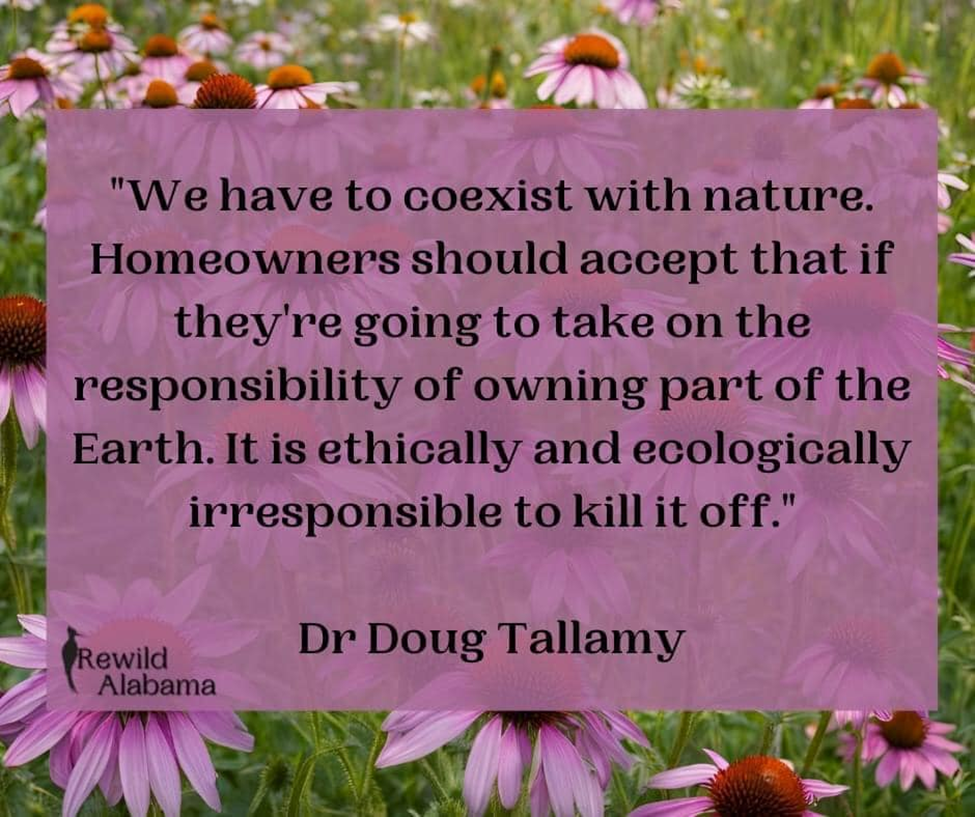
The name Homegrown National Park (HNP) was coined by cofounder Professor Doug Tallamy to describe a new culture where we all make a difference in our habitats. As a professor in the Department of Entomology and Wildlife Ecology at the University of Delaware in Newark, Delaware, Tallamy has taught insect taxonomy, behavioral ecology, and other related subjects. Chief among his research goals is to better understand the many ways insects interact with plants and how such interactions determine the diversity of animal communities. A Wild Ones Honorary Director since 2009, Tallamy was named a Wild Ones Lifetime Honorary Director in 2018.
Their Mission – “Homegrown National Park catalyzes people to plant native and remove invasive plant species at home and in their communities — one of the most impactful actions anyone can take to restore and protect the natural habitats that support all life.”
Their Vision – “A world where the restoration and protection of native habitats is mainstream, the default behavior of everyone and every organization.”
According to Tallamy, this is our call-to-action:
Our National Parks, no matter how grand in scale, are too small and separated from one another to preserve (native) species to the levels needed. Thus, the concept for Homegrown National Park, a bottom-up call-to-action to restore habitat where we live and work, and to a lesser extent where we farm and graze, extending national parks to our yards and communities. ~ Doug Tallamy
But how do we join the HNP movement to restore habitat where we live and work? It’s easy!


Plant Native
HNP has both plant and seed partners listed on their website. Of special interest is Ecoplantia, an online nursery and retail garden center providing Roll-Out Gardens™ and native plants to customers throughout the eastern half of the United States. At their retail garden center in Frederick, Maryland, Ecoplantia is active in the community, providing plants, education, and landscaping services.
Ecoplantia’s trademarked Roll-Out Gardens™ are biodegradable garden templates featuring successional blooms through each season, with plants that provide habitat for pollinators. Through their collaboration with HNP, Ecoplantia offers eight Keystone Roll-Out Garden™ choices designed for EPA Level II ecoregions. These gardens each feature eight species (four keystone species and four additional powerful natives) that pollinators thrive on. For each template that is sold, a portion of the proceeds are donated to HNP. “Professionally designed native plant gardens printed onto biodegradable paper and shipped with ALL of the actual plants! No seeds, just plants. Ecoplantia Roll-Out Gardens™ are the ideal choice for both beginners and seasoned gardeners looking to enhance their outdoor spaces. These hassle-free gardens remove the need for extensive research, allowing you to easily and confidently establish a vibrant, eco-friendly garden that benefits the environment.” ~ Source: Homegrown National Park on Facebook
Remove Invasives
In their article “Removing Invasive Plants from Your Property Helps to Protect Wildlands“, HNP shares tools to help you identify the invasive species you are most likely to encounter and offers ways to remove them to make room for native plants that will welcome and support the wildlife in your yard.
Get On The Map
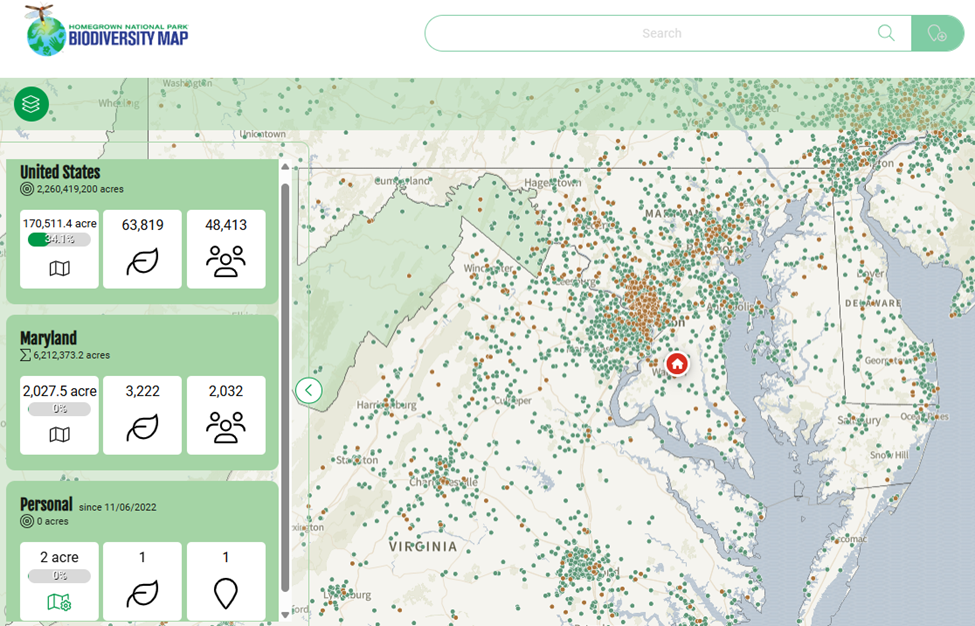
Gettng on the map is easy! It only takes a minute to get your habitat on the HNP Biodiversity Map. Please join the global movement to restore biodiversity and protect pollinators! I know that Southern Maryland and the Chesapeake Bay region have a lot more biodiversity habitats than currently displayed on the map, so please consider adding your habitat today. Go to https://map.homegrownnationalpark.org/
Upcoming HNP and Wild Ones Webinar
Don’t miss the opportunity to catch the upcoming webinar with Q & A on Tuesday, April 28, 2026, from 11 am -1 pm ET.
What Is Wild and Why It Matters
Join award-winning author, landscape designer, photographer, and educator Rick Darke for a free national webinar on native plant gardening, ecological landscape design, and biodiversity. In this Earth Day webinar, Rick Darke will discuss in detail the dynamic nature of wild gardening. Using examples of landscapes he’s designed or co-designed, he’ll demonstrate how this approach is sensibly ecological and eminently practical for homeowners who wish to adopt a meaningful stewardship model for their home habitat.
A well-made home landscape should be full of life, human and otherwise, providing infinite daily opportunities to experience that glorious multiplicity of things and living processes. This virtual event explores how welcoming authentic wildness into your home landscape can create resilient, beautiful spaces that support pollinators, wildlife, and local ecosystems.
Wildness is a renewable resource. Inviting a bit of authentic wildness into your garden is the most rewarding way to create a truly vibrant landscape that will sustain both the gardeners and a stunning array of local and regional biodiversity.
Rather than maintaining plants in fixed patterns, gardens that welcome wildness embrace the resiliency of managed, self-perpetuating plant communities.
Participants will leave with a deeper understanding of wildness as a continuum, a renewed awareness of its presence in everyday life, and a framework for creating landscapes that are both functional and rooted in place.
This event is a fundraiser for Homegrown National Park and Wild Ones; ticket prices: Free – $25 (pay what you can).
The Extraordinary Caterpillar
Don’t miss the opportunity to attend or host a screening of “The Extraordinary Caterpillar“. The film features HNP co-founder, Dr. Doug Tallamy, and shines a spotlight on the critical—but often overlooked—role caterpillars play in biodiversity.
“Caterpillars are the engine of food webs. They feed birds, support pollinators, and keep ecosystems thriving. By restoring native plants, we restore caterpillar populations—and that’s at the very heart of our mission. follows the scientists and community activists with this peek into the dazzling world of nature’s tiniest superheroes.” ~ https://homegrownnationalpark.org/extraordinary-caterpillar/
In Southern Maryland, you can view “The Extraordinary Caterpillar” at NatureFest 2026 on Saturday, May 30, 2026, between 10 am – 3 pm. Keep an eye on our event page for viewing times.
Resources
- Listen to Restoring Ecosystems, One Yard at a Time: A Conversation with Doug Tallamy Wild Ones Development Director Josh Nelson hosted renowned author, entomologist, and Wild Ones Lifetime Honorary Director Doug Tallamy, in this Gardenside Chat. Doug’s groundbreaking work has emphasized the vital role of native plants in supporting ecosystems and fostering biodiversity. In this conversation, we learn how small changes in landscaping practices can yield profound ecological benefits, and why grassroots efforts are essential for addressing the biodiversity crisis.
- The Works of Doug Tallamy – Native landscapes are essential infrastructures for our ecosystems. Few people have advanced this idea more clearly than Doug Tallamy. As a Wild Ones Lifetime Honorary Director, Tallamy’s research, writing, and advocacy have shaped much of what Wild Ones believes and shares: that ordinary yards and gardens can become powerful sites of ecological restoration.
- The Mosquito Bucket Challenge – A Safer Alternative to Fogging. The Mosquito Bucket Challenge is a simple, effective alternative to fogging—protecting pollinators, pets, and people by safely targeting mosquito larvae without toxic sprays. It’s safe, it’s affordable, it’s better for biodiversity. And it actually works. And members of the Wild Ones Chapter Officers Facebook Group are encouraged to check out Sara’s post on how Wild Ones chapters can take the idea a step further.
- Follow HNP on Instagram, Facebook or join their HNP Official Facebook group
- Note: The Facebook group Bringing Nature Home is not affiliated with HNP. Read more here.
Questions for HNP?
Please reach out to HNP with any questions.
Wild Ones Chesapeake Bay is deeply rooted in native plants and cultivating partnerships, while striving to educate, advocate, and collaborate to connect people and native plants for a healthy planet. Our vision is native plants and natural landscapes thriving in every community. Check out our Events page, Google calendar, Facebook, and/or Instagram for our upcoming events. And don’t forget to subscribe to our new YouTube channel and email subscriber list!
