National Pollinator Week 2026 is observed during the week of June 22-28. “Pollinator Week is an annual celebration in support of pollinator health that was initiated and is managed by Pollinator Partnership. It is a time to raise awareness for pollinators and spread the word about what we can do to protect them. The great thing about Pollinator Week is that you can celebrate and get involved any way you like! Popular events include planting for pollinators, hosting garden tours, participating in online bee and butterfly ID workshops, and so much more.” ~ Pollinator Partnership
Pollinator Week Proclamations
As part of our ongoing efforts to promote native plants for pollinators and other insects in our region, Wild Ones Chesapeake Bay reached out to the State of Maryland, and the counties we serve (Charles, Calvert, St. Mary’s, Anne Arundel, and Prince George’s) to request proclamations to support National Pollinator Week. We are wildly appreciative that the State of Maryland and each county in Southern Maryland has signed a proclamation to recognize June 22-28, 2026 as Pollinator Week.
Read the proclamations:
- State of Maryland
- Charles County
- Calvert County
- St. Mary’s County
- Anne Arundel County
- Prince George’s County
To recognize Pollinator Week across our region, we are encouraging residents to recognize this observance by planting pollinator-friendly native plants that include trees, shrubs, grasses, and flowers; providing nesting sites that support all pollinator life stages; avoiding pesticide use; learning more about the many environmental and community benefits pollinators provide; spreading the word on the importance of pollinators; and attending Pollinator Week events in your local area.
What are pollinators and why are they important?
A pollinator is any organism that transfers pollen –the male genetic material of plants- from one flower to the next, resulting in the production of fertile seeds.
- Pollinator species such as birds, bees, butterflies, and other insects are as essential as sun, water, and soil in producing much of our food supply, including very diverse dietary choices rich in fruits, nuts, and vegetables. Did you know that one out of every three bites of food is possible because of pollinators!
- Pollinators are essential in producing viable native seeds for native plant propagation.
- Pollinators provide significant environmental benefits that are necessary for maintaining healthy, diverse ecosystems in towns and cities.
- Pollination plays a vital role for the trees and plants of our community, enhancing our quality of life, and creating recreational and economic development opportunities.
- Pollinators have experienced population declines due to a combination of habitat loss, poor nutrition, pesticides, parasites, diseases, and climate change.
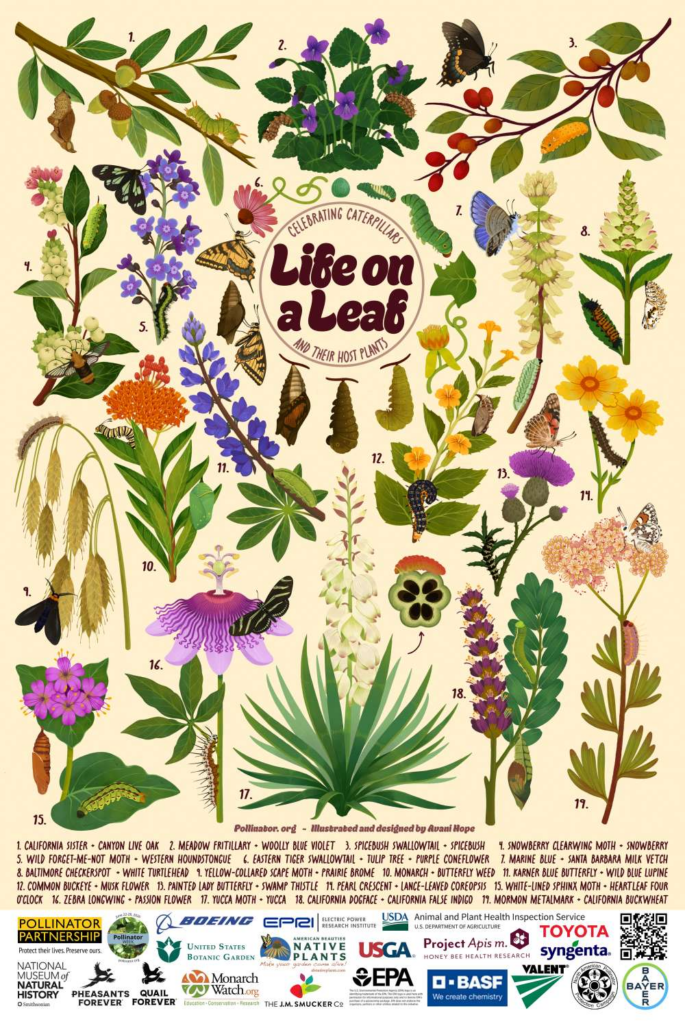
“The 2026 Pollinator Poster, Life on a Leaf: Celebrating Caterpillars and Host Plants, showcases the vital host plants that support Lepidoptera (butterfly and moth) larvae. Healthy habitat and host plant availability are critical to the life cycle of many of our vulnerable pollinator populations. Our goal is to showcase the impact that individuals can have on the life cycles of many of our pollinators just by planting native host plants in their native habitat. Hundreds of species of Lepidoptera in North America rely on one or two specific plants for reproduction. Whether a home garden, roadside habitat, a municipality, farmland, or a corporate garden, we can all make a difference by creating important habitat or food sources through host plants for our pollinators.” ~ Pollinator Partnership
ICYMI (In Case You Missed It)
Cross-pollination between Wild Ones Chesapeake Bay and James A. Forrest Career and Technology Center grows stronger every year. Read more from one of this year’s students in the Natural Resources Management class in a recebt BayNet article, Pollinator Week Highlights Partnership Between Wild Ones Chesapeake Bay And Forrest Tech Students.
Attracting Pollinators to Your Garden Using Native Plants (Eastern United States)
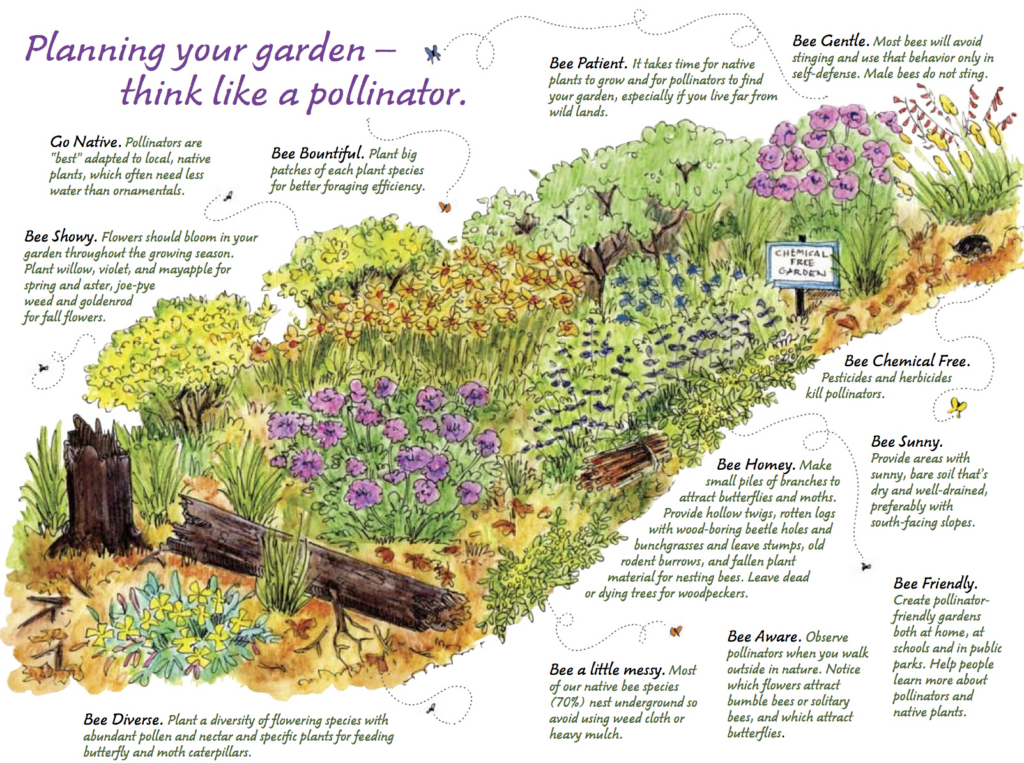
Think like a pollinator with these tips from the US Forest Service:
- Go Native. Pollinators are “best” adapted to local, native plants, which often need less water than ornamentals.
- Bee Showy. Flowers should bloom in your garden throughout the growing season. Plant willow, currant, and Oregon grape for spring and aster, rabbit brush and goldenrod for fall flowers.
- Bee Bountiful. Plant big patches of each plant species (better foraging efficiency.)
- Bee Patient. It takes time for native plants to grow and for pollinators to find your garden, especially if you live far from wild lands.
- Bee Gentle. Most bees will avoid stinging and use that behavior only in self-defense. Male bees do not sting.
- Bee Chemical Free. Pesticides and herbicides kill pollinators.
- Bee Homey. Make small piles of branches to attach chrysalis or cocoons. Provide hollow twigs, rotten logs with wood-boring beetle holes and bunchgrasses and leave stumps, old rodent burrows, and fallen plant material for nesting bees. Leave dead or dying trees for woodpeckers.
- Bee Sunny. Provide areas with sunny, bare soil that’s dry and well-drained, preferably with south-facing slopes.
- Bee Diverse. Plant a diversity of flowering species with abundant pollen and nectar and specific plants for feeding butterfly and moth caterpillars.
- Bee a Little Messy. Most of our native bee species (70%) nest underground so avoid using weed cloth or heavy mulch.
- Bee Aware. Observe pollinators when you walk outside in nature. Notice which flowers attract bumble bees or solitary bees, and which attract butterflies.
- Bee Friendly. Create pollinator friendly gardens both at home, at schools and in public parks. Help people learn more about pollinators and native plants.
Native Plant Resources
Visit Our Gardens and learn about the many native gardens we support within our community, find native plant resources, and check out sources for native plants in Southern Maryland
Plant Shares and Swaps
- Check out this running list of native plant shares and sales by the Maryland Native Plant Society.
- Check out this list of shares and sales by Amanda Wray, President of Wild Ones Greater Baltimore.
- If you are a member of the Maryland Area Gardening for the Environmentally Conscious (MAGEC) group on Facebook, check out their comprehensive list of Maryland plant shares and sales in the comments of their annual thread.
Events Celebrating Native Plant Month
Pollinator Week 2026- Pollinator Bioblitz
Join the iNaturalist community science project to collect data on the distribution of pollinators across the US, Canada, and Mexico during pollinator week (June 22-28th). Of special interest to the project is learning about and documenting floral resources that support our pollinators. Please share photos of pollinators visiting floral resources in your neighborhood. When possible, try your best to identify the pollinator and floral resources captured in the image. The iNaturalist community of volunteers will help confirm and add identifications. Read more….
UP Meadow Day
📆 Saturday, June 27, 2026
⏰ 9:00 am – 12:00 pm
📍UP Native Pollinator Meadow, University Park, MD, 20782 Map
Join Wild Ones Chesapeake Bay at UP Meadow Day – This is a community event hosted by the Town of University Park Sustainability Committee and celebrates native pollinator habitat in University Park! Read more…
Bug Fest – North Beach Nature Center
📆 Saturday, June 27, 2026
⏰11:00 am – 2:00 pm
📍North Beach Nature Center at Wetlands Overlook Park
Get ready for a buzzing good time at BUGFEST – a fun-filled day celebrating all things creepy, crawly, and cool. Participants can enter a free raffle on-site for a chance to win a bug hotel! Read more…
Click here to see all of our upcoming events.
How will you celebrate Pollinator Week?
Explore the Wild Ones curated list of top reads for all ages that explore the vital role pollinators play, and how you can help protect them through native plants and habitat gardening.
Visit the Pollinator Week page on the Pollinator Partnership website for the following resources and more!
The Pollinator Partnership has some resources to help you select a few plants to focus on if you have a small space and are just getting started. Find the full pictured guide here (along with guides for other parts of the country).
Did you know that the University of Maryland Extension website has a section devoted to Pollinators with educational resources and tools to help you and your community celebrate and learn about pollinators. Check out their offerings:
- Maryland Pollinator Week Toolkit
- Pollinator Power – Educational Tools & Tips Webinar
- Buzzworthy Beescaping: Empowering Others to Cultivate Native Bee Habitats (Webinar)
Additional Pollinator Resources
The Maryland Agronomy News Blog published a multi-part series on pollinators primarily during the summer of 2020. This series covers various insect and animal groups that contribute to pollination services in Maryland and beyond.
- Part 1: Moths, Butterflies, and Pollination (June 5, 2020) – Discusses the role of Lepidoptera as vital pollinators in both wild and managed lands.
- Part 2: Flies and Pollination: More than Just Aphid Slayers and Nuisances (June 15, 2020) – Highlights syrphid flies (hoverflies) and bee-flies as significant contributors to agricultural systems.
- Part 3: Beetles and Pollination (June 29, 2020) – Explores the evolutionary history of beetles as some of the earliest insect pollinators.
- Part 4: Bats and Pollination (July 23, 2020) – Examines the specialized adaptations of bats for pollination, particularly in tropical regions and their importance to industries like tequila.
- Part 5: Hummingbirds and Bird Pollination (August 4, 2020) – Details the morphological traits of hummingbirds and their specific interactions with nectar-rich flowers. [1, 2]
- Part 6: Ant Influences on Pollination and Some Other Plant Services (August 25, 2020) – Covers the rarer instances of ant pollination and their broader ecological roles, such as seed dispersal.
- Part 7: Wasps, Surprisingly Cool Pollinators (August 31, 2020) – Focuses on wasps as efficient pollinators, specifically highlighting fig wasps and their unique mutualism.
- Part 8: Rodents and Other Non-Flying Mammal Pollinators
- Additional relevant content from the Maryland Agronomy News Blog includes a 2017 guide on Protecting Pollinators in Ag Landscapes, which provides practical tips for maintaining floral and nectar resources.
✍️M.Smith
Wild Ones Chesapeake Bay is deeply rooted in native plants and cultivating partnerships, while striving to educate, advocate, and collaborate to connect people and native plants for a healthy planet. Our vision is native plants and natural landscapes thriving in every community. Check out our Events page, Google calendar, Facebook, and/or Instagram for our upcoming events. And don’t forget to subscribe to our new YouTube channel and email subscriber list!
