
Over the years, I’ve wanted to write about tips for spring cleaning in the garden. But it seems the tips I wanted to share can be controversial. You may have heard catchy phrases like “chop and drop”, “save the stems”, “leave the leaves”, “no mow May” or “slow mow summer”. And then there’s “less is more” and “messy is better”. However, these ideas are often misinterpreted or misguided rather than evidence-based information backed by science. And after doing some research, one of my key takeaways is “It’s not about doing less, it’s about doing better.”
So how do we weed through the taglines and cut through the noise? What’s the best approach? The answer lies in your personal intentions (your goals, or “what” you want to do) and achieving those goals through intentionality (being purposeful, proactive, or “how” you achieve those goals). Over the years, I’ve changed how I maintain my 3-acre, mostly wooded property with it’s manicured lawn and sparsely planted ornamental flower bed to a native habitat. I’ve done it by adopting ecological gardening practices, intentionally reducing 15,000 square feet of lawn to less than 2,500 square feet and installing native plants (trees, shrubs, perennials, biennials, annuals, grasses, sedges, ground covers) that provide ecosystem services to benefit pollinators, insects, birds, and other wildlife. It’s been a rewarding journey that I’ll cover in depth in a future blog post. But for now, I’ll explain why I finally felt compelled to share my thoughts on a few controversial spring-cleaning practices, including the 50 degree “rule”, managing stems, and No Mow May.
So why am I compelled to share my thoughts on best practices now? I recently came across some advice from Shaun McCoshum, PhD, that seemed as if he’d been watching my every move. And I knew it was something I had to share with others. Among other things, he was addressing the 50 degree (50F) “rule” often promoted and misquoted this time of year, advising that “we should shift our focus from no harm to least harm when managing our yards. The 50F rule is to help reduce harm by disturbing animals when it is warm enough for them to move and find new shelter. It is more specifically focused on cleaning up leaves, moving objects, or disturbing soils than it is for cutting back vegetation.” ~ Shaun McCoshum, PhD
Spring is here for many folks, and while the gardening world is buzzing with contradictory advice, it’s time to cut through the noise and get our hands dirty, but with purpose! Some experts have said wait until it is 50F before moving leaves and trimming back dried up vegetation where other folks chastise this because animals haven’t emerged yet. A few experts advocate to let you yard “sleep in” and leave things until a few months into the growing season. Then there are the folks who think your yard should look messy and advocate for doing as little as possible and let “nature do its thing”. Sadly, none of these methods are completely right, so let’s dive into the details.
First, it is important to clarify that tidying up our yards does not mean bagging things up and shipping them off. In this article, tidying and cleaning up areas assumes the majority of materials will be kept on site. Repurposing leaves for mulch and laying cut vegetation in compost piles or tucked away under shrubs allows for eggs and pupae to stay on site and emerge near food. It is also good practice to tidy up less than half of similar areas in a year. This allows for life cycles to complete in undisturbed areas and re-establish in cleaned up areas. Similarly, areas that need regular upkeep like mowed paths should be rotated so that some areas are left undisturbed each time.
Tidying up our yards and caring for habitat generally means we want to support wildlife and do no harm. However, we have to understand that cleaning up our yards at any point will kill some insects just like bison, bears, elk, etc. kill some wildlife when they eat, laydown, walk, etc. in these habitats. Similarly, doing nothing and letting plants grow wild will quickly reduce plant and insect diversity over time because native plant communities evolved with large animals disturbing them. So, we should shift our focus from no harm to least harm when managing our yards. The 50F rule is to help reduce harm by disturbing animals when it is warm enough for them to move and find new shelter. It is more specifically focused on cleaning up leaves, moving objects, or disturbing soils than it is for cutting back vegetation. This rule has nothing to do with pupae emergence, eggs hatching, or bumblebee queen activity but is often mis-quoted for those reasons. The only time we should be disturbing soils or moving objects where animals might shelter when it is less than 50F is bringing firewood in, taking care of storm damage, or working on things that are not tidying up our yards.
Postponing yard clean-up to later in the spring can actually harm plants. In healthy habitats, large mammals would move through the landscape breaking dead vegetation. Snow storms and heavy rains further compact the dried vegetation, creating a shorter thatch layer. Rodents, large mammals, and birds also clear areas and expose soils during the winter, which provide spaces for seedlings to establish in spring. Leaving dead vegetation creates an unnaturally thick layer that plants have to get through before reaching the light they need to photosynthesize. Various studies excluding large mammals from prairies and meadows have shown that plant and insect diversity decrease over a few years, so we want to clear dry leaves and grasses before plants start emerging. Cut back dry stalks so they stand 6-18 inches. Lay cut material around the base of the plant to function as mulch. The single cut may kill a pupating insect, but the rest of the nest will remain intact.
Managing our yards can have an untidy appearance especially if the goal is something like a cottage garden. However, picturesque landscapes and habitats are never referred to as messy, so why are we insulting our gardens? Wood and woody stems can be stacked neatly or hidden behind large shrubs, downed leaves should be cleared from hard surfaces and short-growing full sun plants then repurposed for mulch around larger perennials or compost piles. Plants can be arranged in layers, with low-growing plants around borders and taller plants further into garden beds. The final looks should aim to be more like a picturesque, healthy habitat more than an overgrown weed-lot detached from the natural systems that manage them. We should not try to do as little disturbance as possible; instead we should understand our role as a steward of the land is to be the absent animals and processes that sculpt spaces into beautiful spaces that are essential to wildlife. ~ Shaun McCoshum, PhD
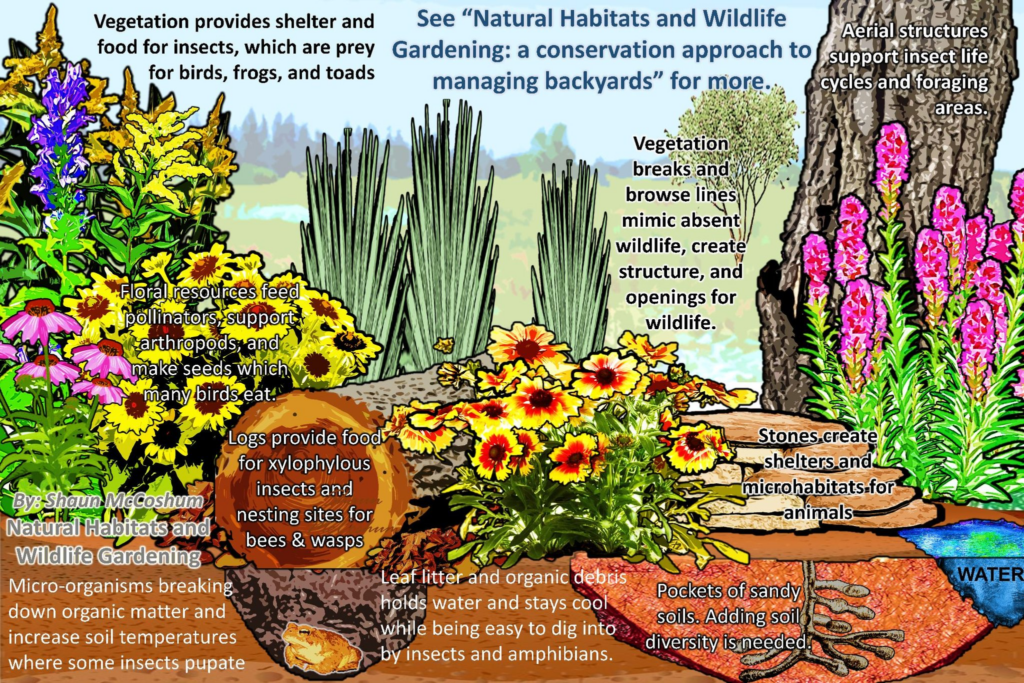
Shaun McCoshum is a Research Ecologist, Certified Wildlife Biologist, Author, and Senior Ecologist. Professional Wetland Scientist, Pollinator Specialist, Conservation, Permitted Rusty-patched Bumblebee & Dakota Skipper surveyor.
50 Degree (50F) Rule
The information from McCoshum brought meaning to the way I manage my garden that I haven’t been able to put into words. So I reached out to McCoshum and asked, “Can you point me to the origin or a reference on why the 50F rule does not apply to stem cutting but rather to moving leaves and other objects and disturbing soil.” – M. Smith
His reply: “The 50F is a recommended minimum temp suggested by herpetologists, aracnologists, and other wildlife biologists who study exothermic animals. If we disturb them and they are too cold, they cannot find shelter again. In turn they will die. There are a lot of old studies on when spiders, bumblebees, millipedes, frogs, toads, and lizards can safely move. Many are fine below 50F but we capture the most animals’ thermal capability at 50F or higher.” (For more information, he recommended his new book, “Natural Habitats and Wildlife Gardening” that just hit shelves. And it’s now on my list of books to read.)
So there we have it: the 50F Rule is based on biological reasoning for the movement of exothermic animals that has been confused with insect emergence; but it is still recommended for minimum temperature. And as McCoshum advises, “Yes we should wait for 50F, yes we should be cutting back dead veg, yes we should be managing our gardens…but this all should be done with care.”
I then asked myself, what do other experts say about the 50 degree rule? In his 2021 article addressing leaf litter, Doug Tallamy, a University of Delaware professor who has a Ph.D. in entomology, writes: “An urban legend called the 50 degree rule seems to be very popular these days, but it is just that: an urban legend… The problem is that each insect species requires its own species-specific temperatures to become active and one prediction of some number of days above 50 does not fit all insects. Species of moths, butterflies, bees, beetles, etc. emerge all season long; some in the spring, others in the summer and others still in the fall…. So, if you think you can pulverize all of your leaf litter, or cutdown the stalks of last year’s meadow plants after a few days at 50 degrees in the spring without hurting the creatures within, you are mistaken.”- Leaf Litter: Love It and Leave It / March 30, 2021 – Homegrown National Park
Remember: species that overwinter in leaf litter and plant material include butterfly and moth pupae, as well as ladybugs, lacewings, and other insects that help control pests.
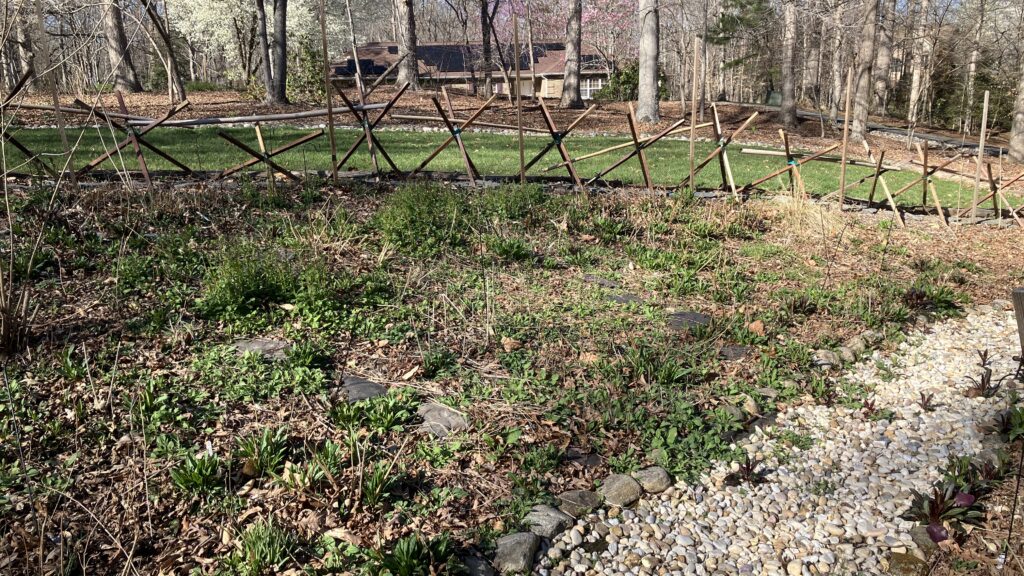
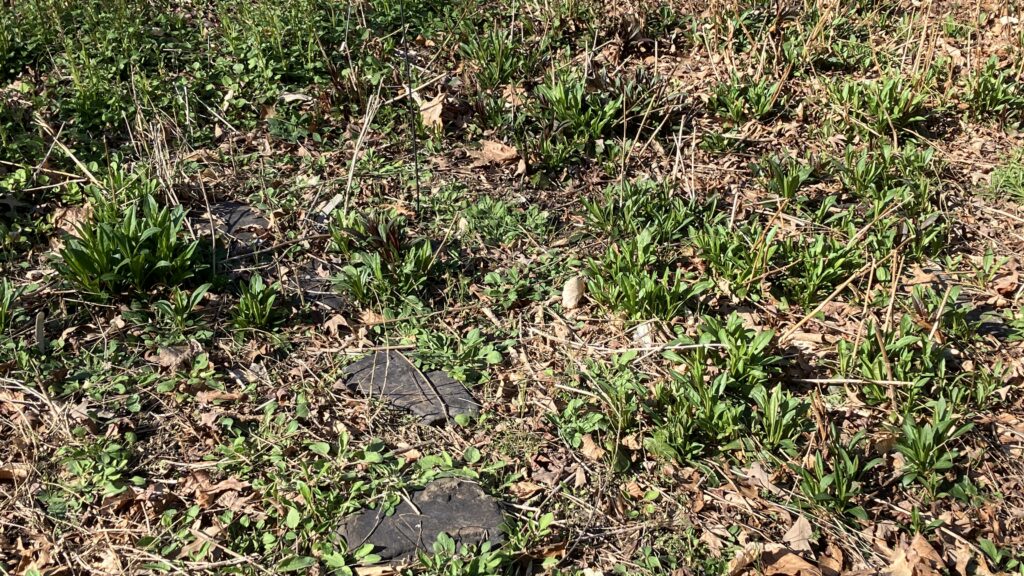
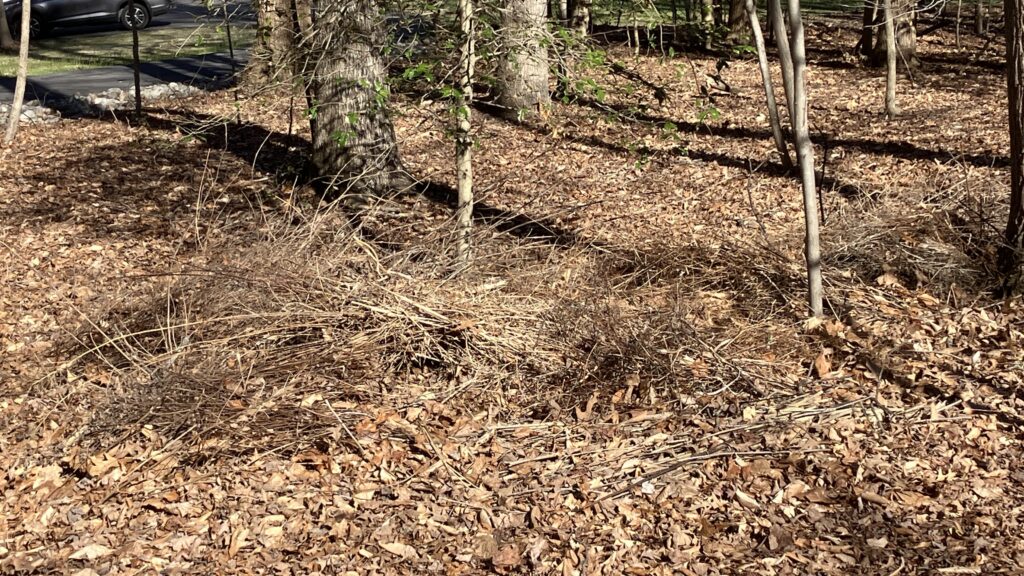
Choose Wisely – Spring Clean with Intentionality
So what will you do this spring? I encourage you to garden with intentionality and take steps to protect biodiversity, including the native plants, pollinators, and wildlife that need our help. Realize that our native habitats are all unique, and we need to do what’s best for the spaces we’ve created by weeding through the social media hype. Shift your focus from no harm to least harm when managing your yard, and understand your “role as a steward of the land is to be the absent animals and processes that sculpt spaces into beautiful spaces that are essential to wildlife.” ~ Shaun McCoshum
Read the additional blogs in this series:
Wild Ones Chesapeake Bay is deeply rooted in native plants and cultivating partnerships, while striving to educate, advocate, and collaborate to connect people and native plants for a healthy planet. Our vision is native plants and natural landscapes thriving in every community. Check out our Events page, Google calendar, Facebook, and/or Instagram for our upcoming events. And don’t forget to subscribe to our new YouTube channel and email subscriber list!
