The is the third post in a 3-post series inspired by the recommendations of Shaun McCoshum, in which he inspires us, as stewards of the land, to shift our focus from doing no harm to doing least harm when managing our yards. In our first post, we presented McCoshum’s ideas and discussed the 50 degree (50F) rule. In the second, we discussed managing stems. And I saved what may be most controversial for last.
To Mow or Not To Mow – That is the Question
May 1 is just around the corner, and a time when we face the dilemma of whether to mow our lawns. Scores of individuals, cities, and towns have embraced a British conservation movement called No Mow May, whose supporters encourage homeowners to pause or reduce lawn mowing during May.
The Claim: Suspending lawn mowing throughout May is an environmentally-responsible and scientifically-proven way to aid pollinating insects by allowing wildflowers like dandelions and clover to bloom, thus producing nectar resources for early-emerging pollinators. It boosts biodiversity, while reducing carbon emissions from mowers. It’s touted as a simple, high-impact action to support ecosystems.
The Verdict: Unsubstantiated — Needs Further Study and is Laden with Negatives
No Mow May has been promoted by the British charity Plantlife since 2019 and is gaining ground in other countries. But why? The concept invokes warm and fuzzy (or buzzy) feelings in many gardeners’ hearts, with their cheerful signs declaring, “Pardon the weeds! We’re feeding the bees!” But No Mow May puts bees in the bonnets of its opponents, who question the science behind it, deplore what they see as a sloppy look, and even suggest it’s just an excuse for laziness.
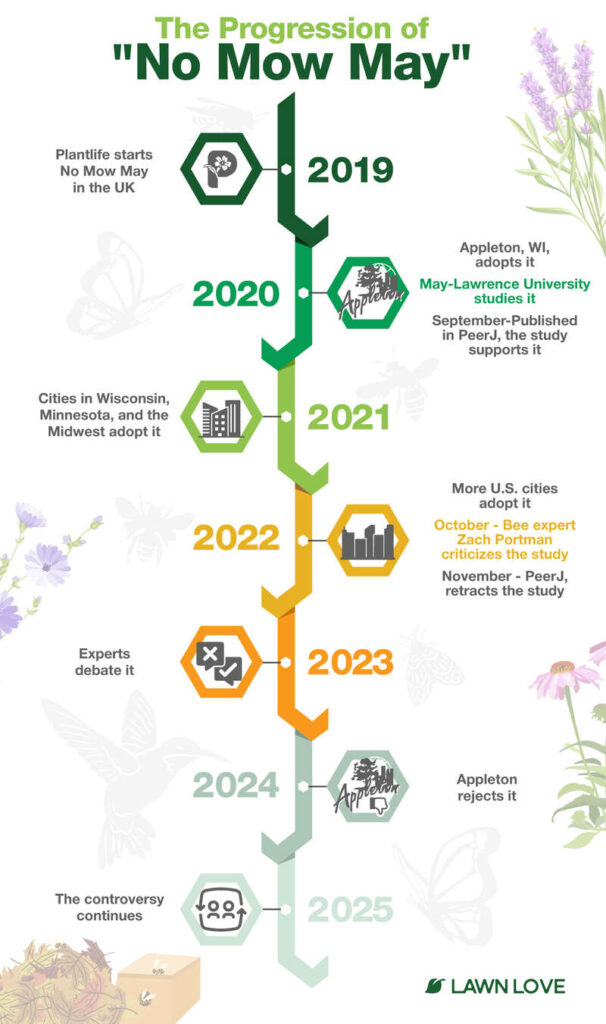
So let’s break it down. In the UK where No Mow May originated, the goal was “for any green space to be more like those flower-rich meadows and pastures that once used to be so plentiful in the countryside that we’ve sadly lost so much of. That means leaving it or part of it to grow long over the summer and then cutting it down at the end, just like a hay meadow.” But does this type of meadow management translate to lawns in the U.S.?
According to Charlotte Urban Institute, “No Mow May promotes the misguided notion that a beautiful, useful meadow will spring forth if we simply get out of the way. That might be possible in remote areas of the Uwharries where native species are still available in the seedbank, but in the typical Charlotte lawn, the result would likely be an array of invasive, non-native species. In our post-wild world, we now need to manage the damage we’ve done to achieve anything approximating a “natural” landscape.”
Research on No Mow May is mixed. Below I’ll summarize the pros and cons I’ve encountered during my research, suggest alternative strategies, and provide a list of resources so you can read for yourself what others are saying.
Supporters offer the following as benefits:
- Simple Action: It is an easy, accessible way for residents to participate in conservation.
- Early Food Source: Allowing dandelions and other ground-layer weeds to bloom provides vital nectar and pollen in early spring when food is scarce.
- Environmental Impact: Skipping the mow reduces greenhouse gas emissions, helping to combat climate change.
- Flexibility: No Mow May isn’t “one-size-fits-all” and can be adapted to local conditions and regulations.
- Increased Biodiversity: Research indicates that reducing mower traffic increases the abundance and diversity of bees, spiders, and other insects.
Opponents criticize what they see as drawbacks:
- Short-Term Impact: No Mow May is a temporary, one-month band-aid; it does not solve the long-term habitat loss that harms pollinators.
- Weak Nutritional Value: Dandelions and annual winter weeds, the primary beneficiaries, are not native to North America and are not highly nutritious, deficient in amino acids needed by bees.
- Lawn Damage: Skipping a month of mowing can damage the turf, causing it to grow too long and eventually hindering the overall ecosystem.
- Not a Universal Solution: It may not work for all climates or turf types, and in some areas, “No Mow April” is more appropriate.
- Ineffectiveness vs. True Restoration: Simply not mowing a traditional lawn for one month does not address the underlying issue: the existence of the lawn itself. Lawns cover more area in the U.S. than all of New England and offer very little ecological value compared to native habitats.
Again I asked myself, what do other experts say? Doug Tallamy sympathizes with the sentiments behind No Mow May, describing the typical American lawn as an “ecological dead zone” and has called for turning half of all lawns on private property in the U.S. into natural havens for bees, other insects and animals. He sees little logic in letting lawns grow longer for a few weeks. If people simply let their grass grow for a month and then revert to a clipped green monoculture, they are teasing pollinators with short-term snacks followed by starvation. Homegrown National Park, founded by Tallamy, urges homeowners to reduce space devoted to regularly clipped grass, add native plants and remove invasive ones.
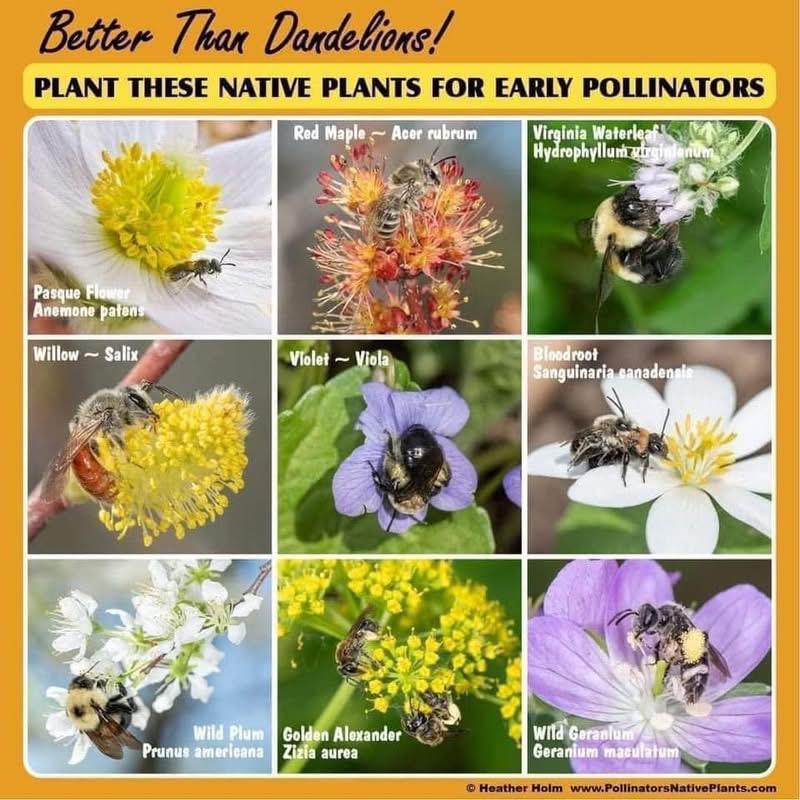
In a podcast with Margaret Roach, Mary Phillips of the National Wildlife Federation tells us it’s only “beneficial if the lawn has a substantial number of noninvasive wildflowers that actually benefit pollinators. If you’re just not mowing monoculture turfgrass, then nothing’s really happening for the wildlife.”
Other experts weigh in, too. Read what they have to say:
Benjamin Vogt: Just Say No to No Mow May
Heather Holms et al: The Surprising Downside of #NoMowMay | Rewilding Magazine
National Wildlife Federation Highlights Top Gardening Trends
Many experts recognize No Mow May as a beneficial, easy-start, voluntary movement to aid early-season pollinators by reducing mowing – but it’s just that: a start. Experts emphasize that while it may be a “gateway” to healthier landscape management, it’s not a permanent solution. Letting your lawn grow wild for one month might help some pollinators, but real impact comes from rethinking the lawn altogether. Long-term strategies are more effective for pollinator conservation than just not mowing for one month.
Long-term alternative strategies:
- Reduce your lawn
- Remove invasive species
- Plant native species, including trees, shrubs, vines, perennials, biennials, annuals, ferns, grass, and groundcovers
- Reduce herbicide use
- Reduce mowing frequency (e.g., every 2–3 weeks)
- Raise the mower blade to let shorter natives, such as violets, bloom
- Ditch the gas lawn mower
- Plant lawn alternatives such as native groundcovers like Path rush (Juncus tenuis) or Pennsylvania sedge (Carex pensylvanica), which can handle foot traffic and high mowing while providing actual food for insects.
- Create soft landings by allowing native species to grow naturally, particularly around the base of trees where caterpillars drop to find habitat in leaf litter.
Additional No Mow May Resources:
- Beyond No Mow May: Here Are the Best Ways to Invite Pollinators to Your Yard | Sierra Club
- Does ‘No Mow May’ Really Help Pollinators?
- Grow Beyond No Mow May: Options for Reducing Your Lawn – The National Wildlife Federation Blog
- Heather Holm’s Top Gardening Activities to Support Native Bees
- Is Your Yard Undergrown? – Humane Gardener
- Maryland’s Wild Acres Mowing
- No Mow May: A movement to help save essential pollinators | One Earth
- No Mow May: An Easy Start for a Nature-Friendly Yard (But Not the Finish Line) | Xerces Society
- No Mow May – Bee City USA
- ‘No Mow May’ Is Catchy But Is It a Good Thing? – Charlotte Urban Institute
- No Mow May less important than native plants for pollinators – Planet Detroit
- Penn State research finds no mow May might not be effective | Centre Daily Times
- Q&A: Pros and Cons of the No-Mow May Movement – Maryland Grows
- What is No Mow May and is it iust for May?
- What’s the deal with “No Mow May?” – Wisconsin Horticulture
- Why ‘No Mow May’ Is Bad for Your Lawn and Wildlife
- Why We Have Lawns – The National Wildlife Federation Blog
- Yes, No Mow May is Great — as a first step. | LinkedIn
Choose Wisely – Mow with Intentionality
So what will you do this spring? I encourage you to garden with intentionality and take steps to protect biodiversity, including the native plants, pollinators, and wildlife that need our help. Realize that our native habitats are all unique, and we need to do what’s best for the spaces we’ve created by weeding through the social media hype. Shift your focus from no harm to least harm when managing your yard, and understand your “role as a steward of the land is to be the absent animals and processes that sculpt spaces into beautiful spaces that are essential to wildlife.” ~ Shaun McCoshum
Read the additional blogs in this series:
Wild Ones Chesapeake Bay is deeply rooted in native plants and cultivating partnerships, while striving to educate, advocate, and collaborate to connect people and native plants for a healthy planet. Our vision is native plants and natural landscapes thriving in every community. Check out our Events page, Google calendar, Facebook, and/or Instagram for our upcoming events. And don’t forget to subscribe to our new YouTube channel and email subscriber list!
