In our last blog, we discussed when to plant container-grown plants (seedlings, plugs, etc.). In this second in a two-part series, we’ll discuss when to plant seeds. For many native plant enthusiasts, nothing beats the thrill that comes from planting a native seed and watching it germinate and thrive into a plant that provides ecosystem services for insects, birds, and other wildlife. Then we collect seeds and start the whole cycle over again. Just as there are nuances for how and when to plant plants, there are nuances to starting plants from seeds.
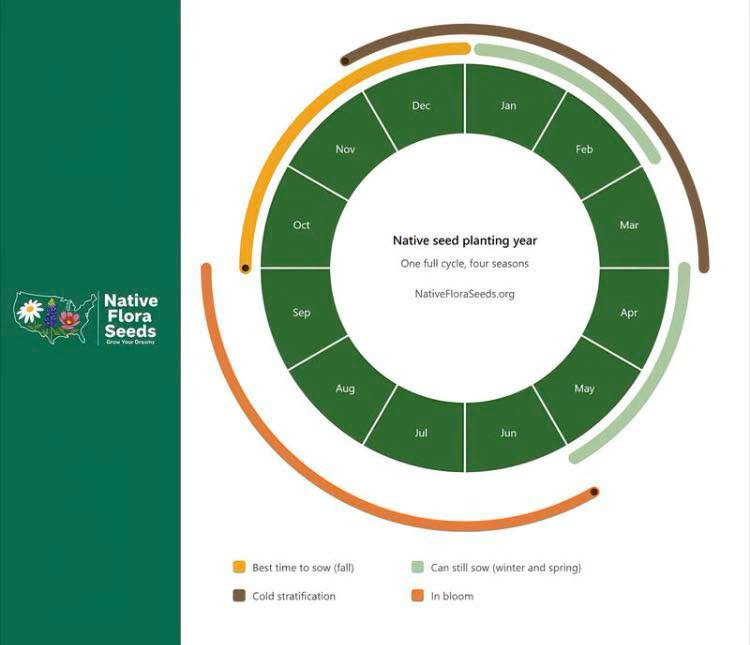
“Most North American native wildflowers evolved to drop their seeds in autumn. Those seeds don’t sprout right away. Instead, they wait through winter, using the cold and moisture to break down their natural dormancy. This process is called cold [moist] stratification, and many native species won’t germinate without it.
That’s why fall sowing works so well. You plant, nature handles the rest, and seedlings emerge in spring on their own schedule.
🟡 Fall (Sep to Nov): Prime sowing window. Seeds settle in before the ground freezes. (Disclaimer: Avoid broadcasting during early warm spells in September to prevent premature germination and frost kill; target late October through November once soil temperatures consistently drop below 50°F).
🟤 Winter (Nov to Mar): Cold stratification happens naturally. Freezing temps and moisture soften seed coats and signal seeds to prepare for germination.
🟢 Winter and spring (Jan to May): You can still sow during this window. Winter sowing catches the remaining cold period, while spring sowing works best for species that don’t require stratification.
🟠 Spring through fall (Mar to Oct): Bloom season. Early species flower in spring, and asters and goldenrods carry the color into October.
Missed fall? You haven’t missed your chance. Sow in winter or early spring and let the remaining cold do the work.” ~ Source: Facebook
While direct sowing in the fall is nature’s way of cold stratifying seeds, it comes with its challenges. Seeds that are directly sown in the ground may be washed away during heavy rains, may be eaten by birds, squirrels, and other wildlife, or they may be outcompeted by weeds. To avoid those and other challenges, Native Flora Seeds offers these tips for artificial cold stratification in your refrigerator, along with this short tutorial.
Locally Grown Advice
Take your seed growing knowledge to the next level with these extensive resources from Bona Terra:
Bona Terra Seed Growing Guide – includes the pros and cons of getting started with seeds, including the pros and cons of both container planting and in-ground planting (i.e., direct sowing)
Bona Terra Seed Planning for Planting Schedule – Growing native plants from seed is extremely easy, but each species has specific requirements for the highest success rate. This guide is meant to be an extension and companion of the Bona Terra Seed Growing Guide. It includes timing for the complete seed cycle, broken down into when to stratify, plant, and collect seeds.
🌱ICYMI (In Case You Missed It)
We’ve shared several resources in the past to help you with your seed collecting and seed sowing needs. We invite you to check out our growing list of resources:
Deeply Rooted in Native Seed Collecting – In this recorded presentation from September 2024, learn the tips and tricks of the trade for harvesting, cleaning, and storing native plant seeds. Harvesting seeds is fun and easy, but beware, it can also become addicting. And we can’t stress enough…you must start with viable seeds for successful germination by any method.
Deeply Rooted in Winter Sowing – In this blog post from December 2024, we introduce you to winter sowing and some of our favorite resources.
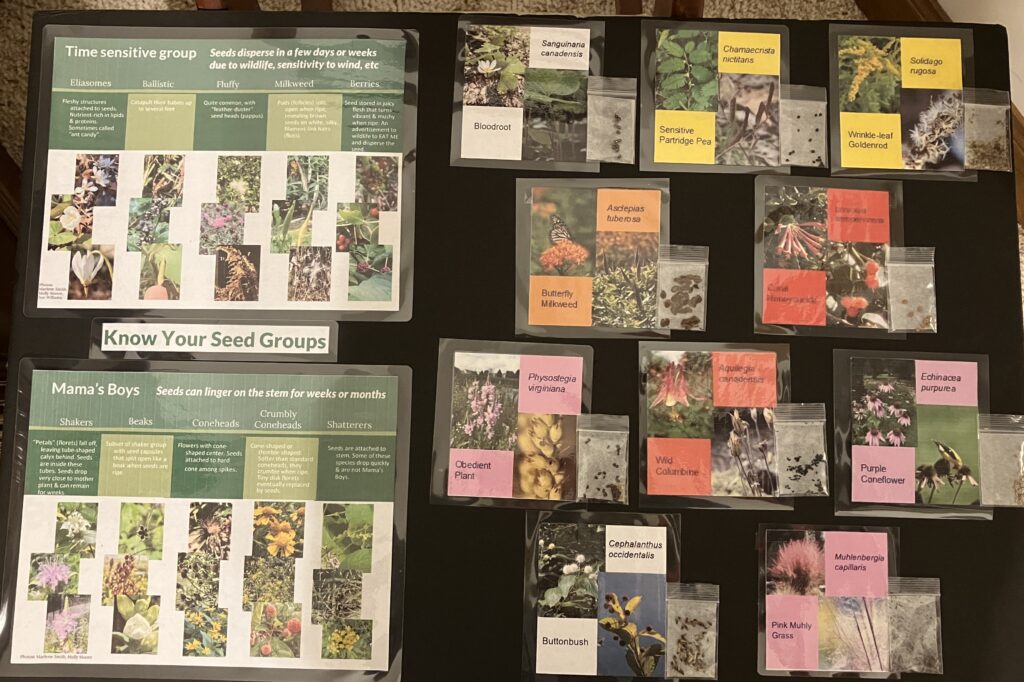
Seed College – Deeply Rooted in Native Seed Propagation – In this recorded presentation from January 2025, Lynne Wheeler, Wild Ones Chesapeake Bay Membership Chair, and Marlene Smith, Wild Ones Chesapeake Bay President, introduce you to seed sowing & propagation to grow your own native plants from seed. They include some of their own tried-and-true methods to inspire you this growing season. Learn how easy and fun it is propagating natives from seed! (Click here for PDF)
Seed Sources
In our Seed College presentation, we provided the following list of recommended seed sources:
Xerces Society The Ins and Outs of Seed Collecting | Bug Banter Podcast – Seed collecting is a hands-on way to learn and care for native plants, plant communities, and the insects that live among them. So who can collect seeds and how do you do it? How do you store the seeds and when is the best time to plant them?
Xerces Society Native Plant, Seed and Services Directory (NPSSD) – A searchable database of businesses, organizations, and networks in Canada, the United States, and Mexico that supply native plants, native seeds, and related services.
Wild Ones Chesapeake Bay is deeply rooted in native plants and cultivating partnerships, while striving to educate, advocate, and collaborate to connect people and native plants for a healthy planet. Our vision is native plants and natural landscapes thriving in every community. Check out our Events page, Google calendar, Facebook, and/or Instagram for our upcoming events. And don’t forget to subscribe to our new YouTube channel and email subscriber list!
Wild Ones’ mission is to promote native landscapes through education, advocacy and collaborative action.