
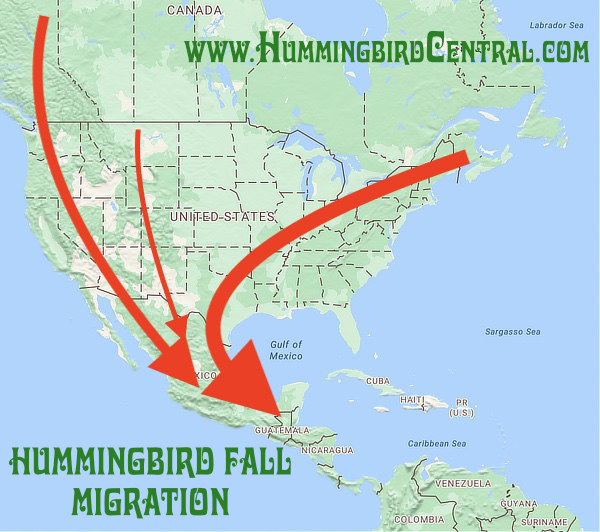
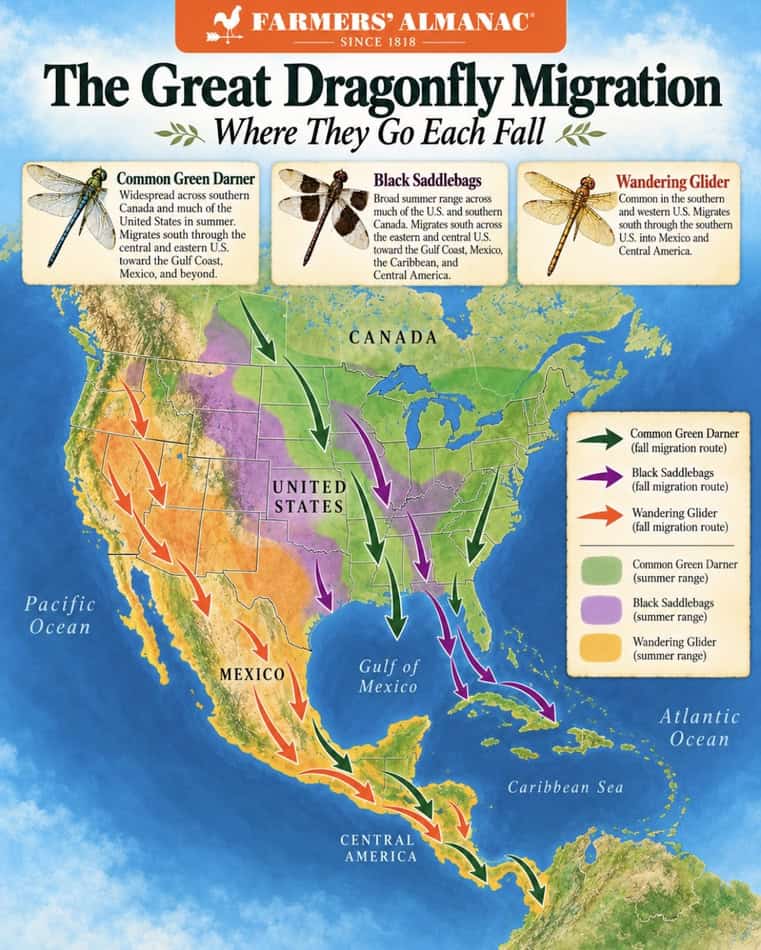
With the arrival of the fall equinox on September 22, environmental triggers mean the days are drawing near for our migratory garden visitors to take flight and head south. While I will dearly miss the hummingbirds, dragonflies, and monarchs when they leave later this fall, I will continue to enjoy them for a few more weeks and will look forward to their reliable return to my garden next spring.

Monarchs
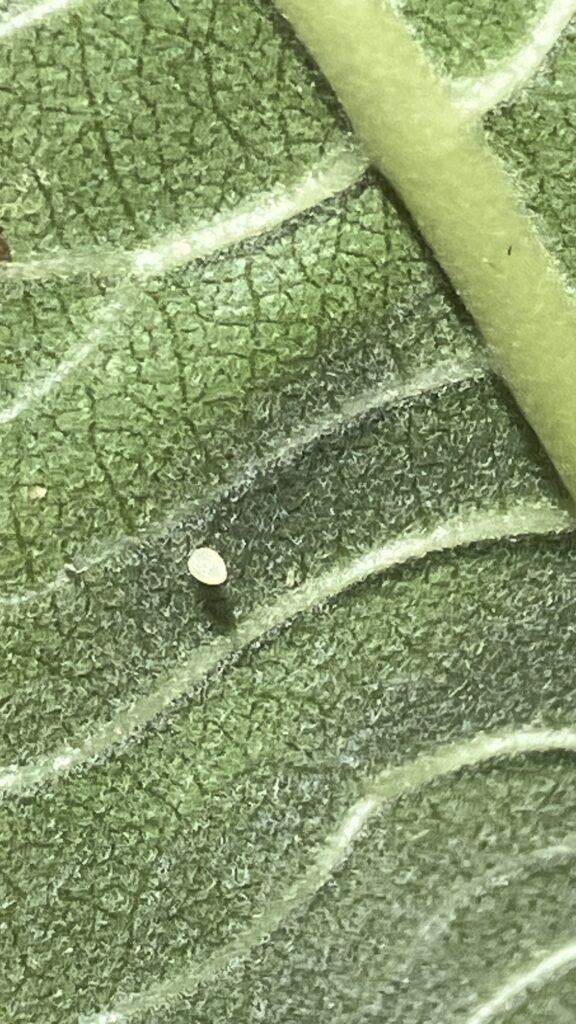
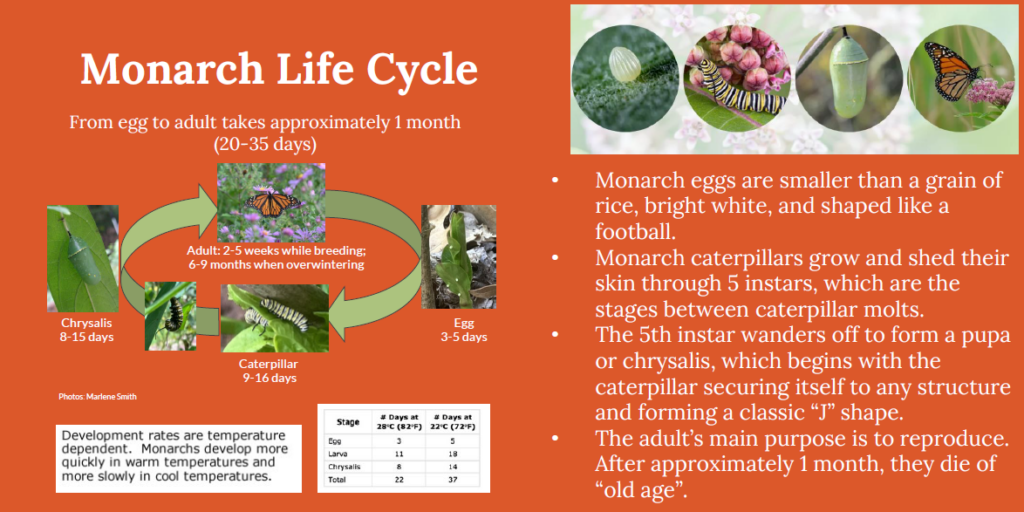
While I saw an occasional monarch butterfly this summer enjoying nectar from various native plants, the real joy was in early September when I saw a monarch laying eggs on common milkweed (Asclepias syriaca) in our mailbox garden, followed by my husband spotting at least a dozen monarch caterpillars on a single common milkweed plant adjacent to our front porch. I have to wonder whether these are members of the super-generation that will make their way to the monarch overwintering site in Mexico, or perhaps Florida.
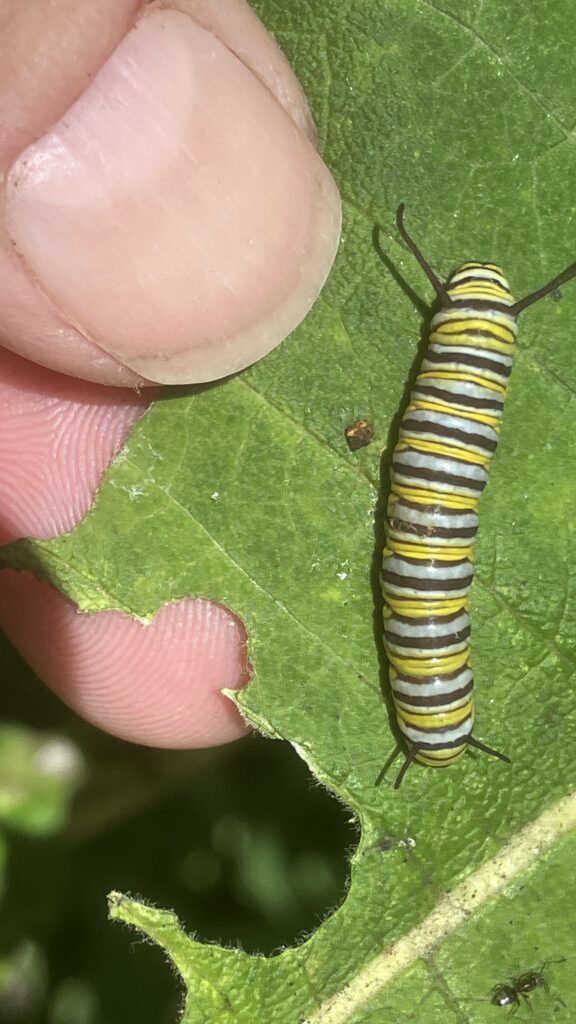
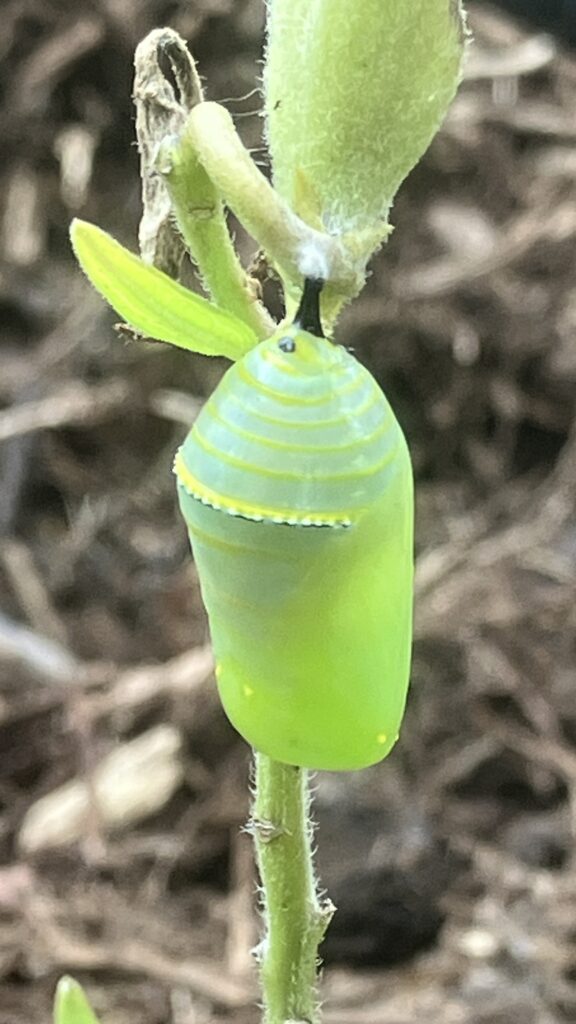
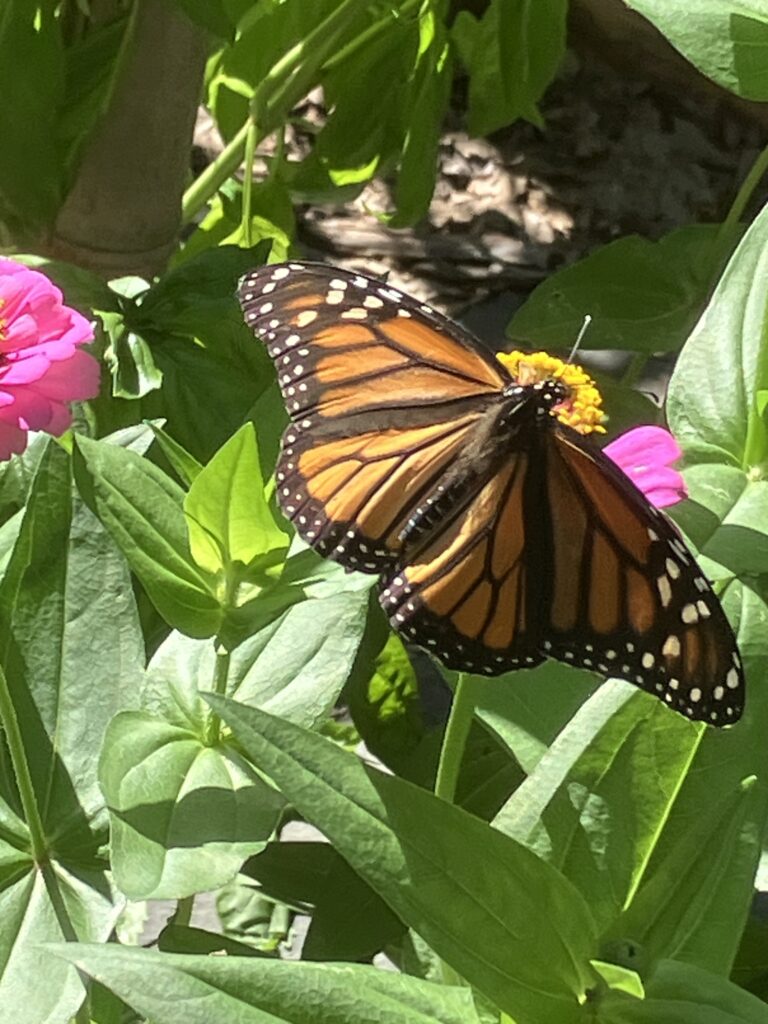
“Who are you?’ said the Caterpillar.
This was not an encouraging opening for a conversation. Alice replied, rather shyly, ‘I — I hardly know, sir, just at present — at least I know who I WAS when I got up this morning, but I think I must have been changed several times since then.'”
Source: Lewis Carroll – Alice’s Adventures in Wonderland, 1865.
Milkweed Ecosystem
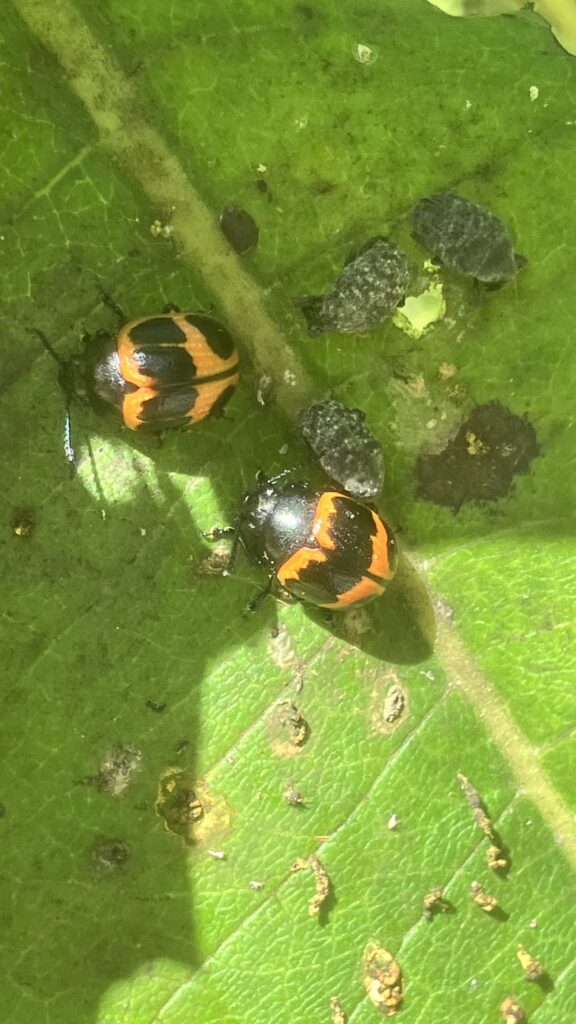
As I observed and photographed the monarch caterpillars on that single milkweed plant, I couldn’t help but notice the other tenants that were coexisting within the milkweed community. Monarch caterpillars, milkweed bugs, milkweed beetles, milkweed tussock moth caterpillars, oleander aphids, and ants were all feeding on parts of the plant, including leaves, stems, seed pods, and sap, or on the honeydew left by the aphids. Earlier in the season, the flowers had attracted bees, wasps, butterflies and other nectar-feeders.
Despite the,defensive chemicals (cardenolides) that make milkweed unpalatable to many predators, milkweed specialists have evolved ways to tolerate or sequester these chemicals. And to give fair warning to predators of their defensive chemicals, many milkweed specialists exhibit orange, red, and black colors as a warning symbol to stay away, don’t eat me.
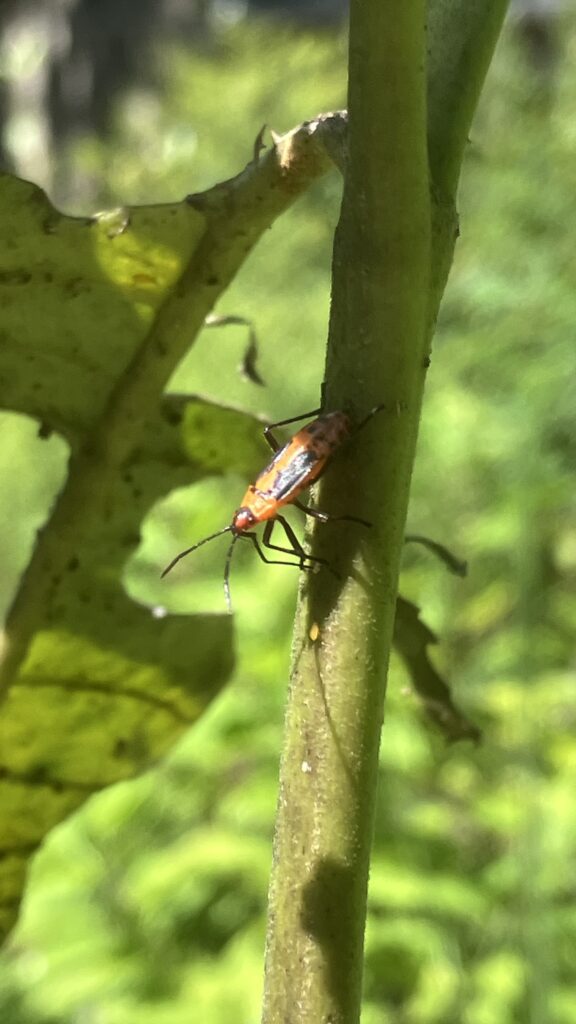
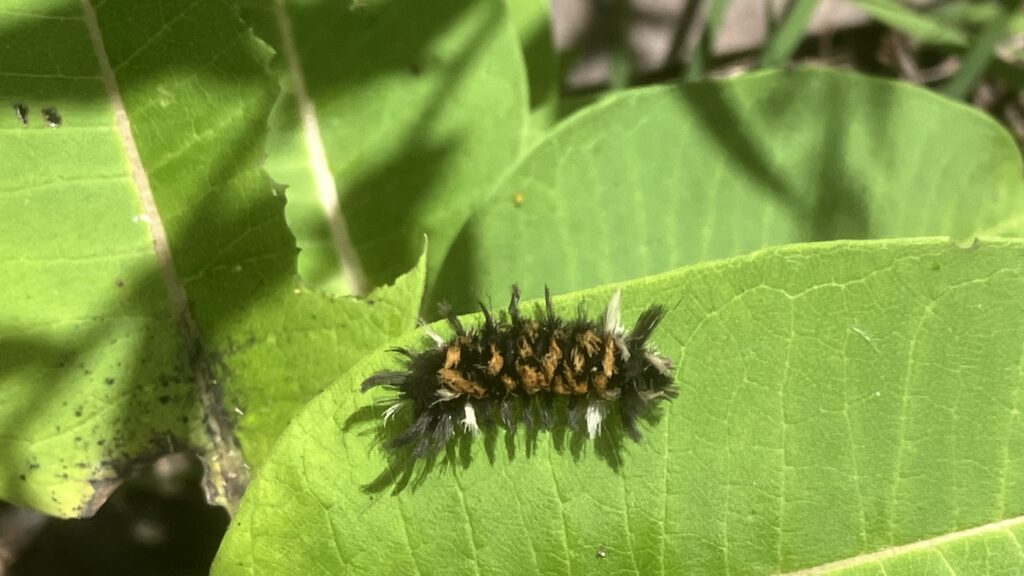
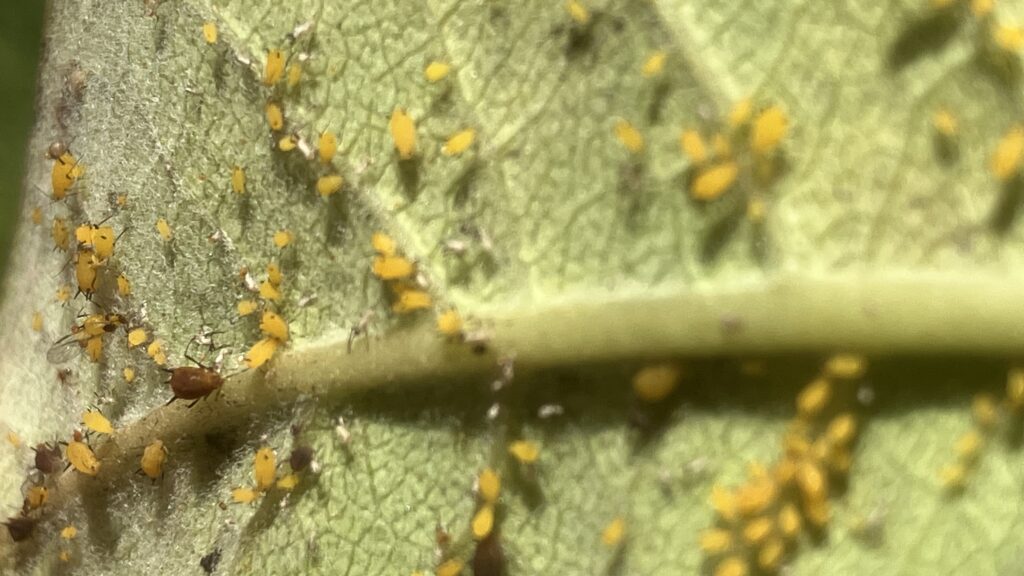
Check out this linked resource to learn why Monarch survival is higher on milkweeds with lots of bugs!
Learn more about life on a milkweed in this series from Wild Acre:
- Life on a Milkweed Leaf, Part 1: Meet the Milkweed
- Life on a Milkweed Leaf, Part 2: Monarch Caterpillar Eggs
- Life on a Milkweed Leaf, Part 3: Monarch Caterpillars
- Life on a Milkweed Leaf, Part 4: From Caterpillar to Chrysalis
- Life on a Milkweed Leaf, Part 5: Monarch Butterflies
- Life on a Milkweed Leaf, Part 6: Red Milkweed Beetles, Milkweed Bugs, Tussock Moths & More
Monarch Host and Nectar Plants
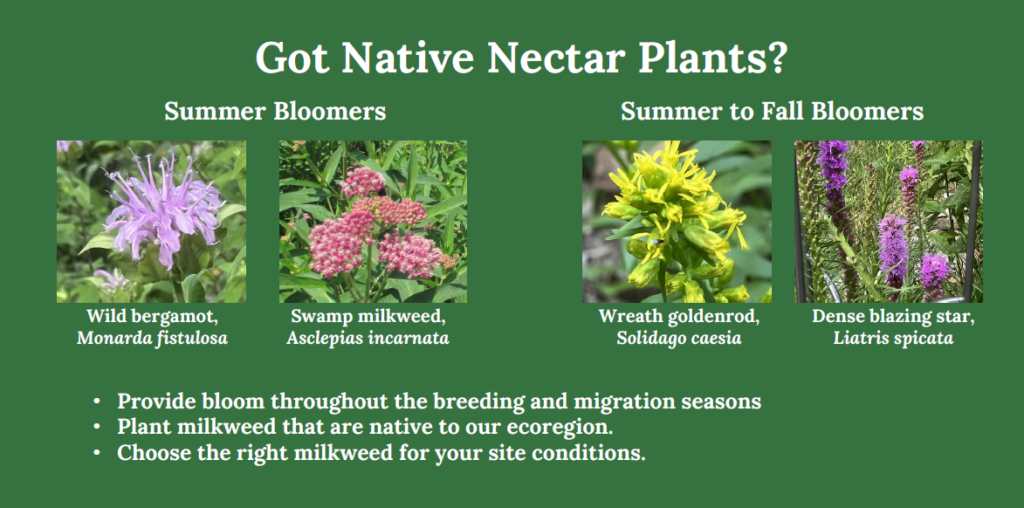
If you are planting additional plants this fall or spring, remember that monarchs depend on both host and nectar plants for their survival: host plants (for the eggs and caterpillars) and nectar plants (for the adults).
Host Plants: Find milkweed species for your region using the Xerces Milkweed Finder.
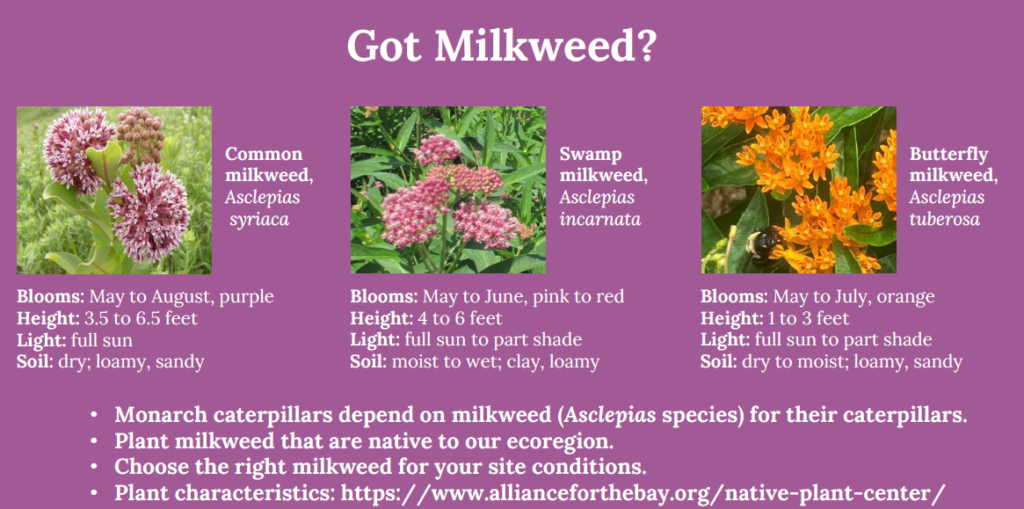
Nectar Plants: Find the Xerces Society monarch nectar plant guide for your region here.
Additional Resources
If something is not eating your plants, then your garden is not part of the ecosystem.
Milkweed Isn’t Just a Host Plant – It’s an Ecosystem! – Environment for the Americas
Monarch Butterflies | Natural Resources Conservation Service
Monarch Butterflies Are Beginning Their Annual Fall Migration to Mexico
Monarch Butterfly Identification Guide – The National Wildlife Federation Blog
Wild Ones Chesapeake Bay is deeply rooted in native plants and cultivating partnerships, while striving to educate, advocate, and collaborate to connect people and native plants for a healthy planet. Our vision is native plants and natural landscapes thriving in every community. Check out our Events page, Google calendar, Facebook, and/or Instagram for our upcoming events. And don’t forget to subscribe to our new YouTube channel and email subscriber list!
