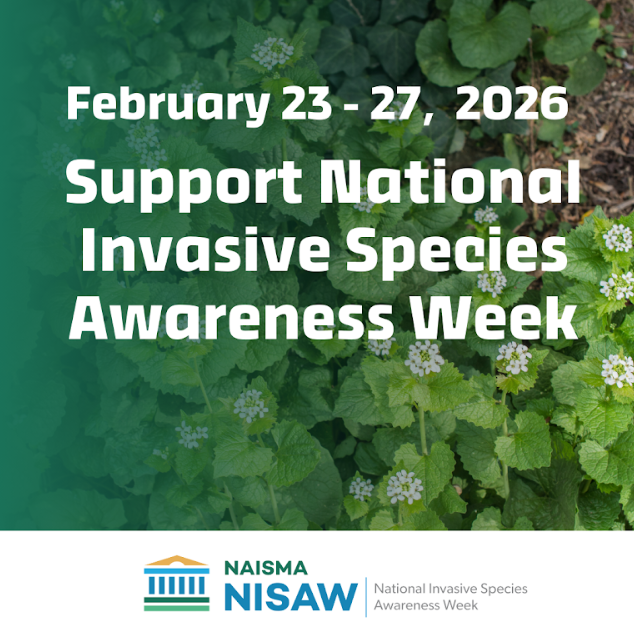
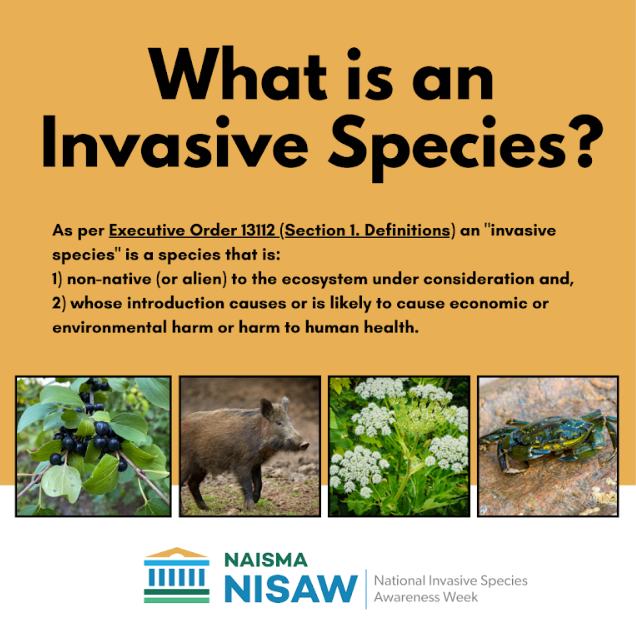
National Invasive Species Awareness Week (NISAW) is here! NISAW is happening from February 23–27, 2026, and is an international event dedicated to raising awareness about invasive species, the threats they pose, and the actions that can be taken to prevent their spread. NISAW is led by The North American Invasive Species Management Association (NAISMA) in support of local, state, tribal, federal, regional, and international private and public organizations.
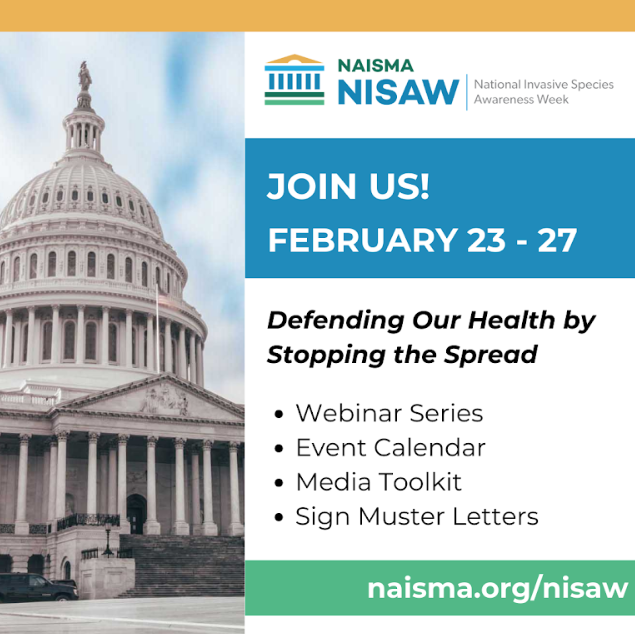
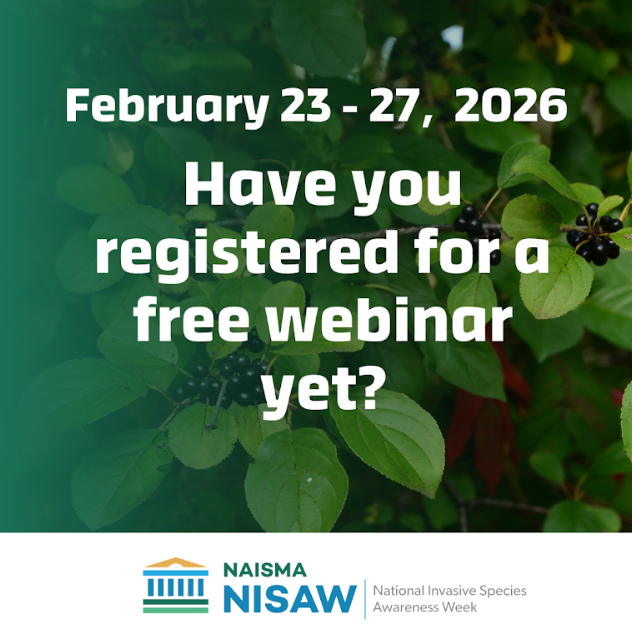
Visit the event website and check out their links to webinars; a free NISAW outreach toolkit to engage lawmakers, agency leaders, and the public; and more.
Tackling Backyard Invasive Plants
In a recent webinar, landscaper Nate Whitmer presented on threats from invasive plants, tips for identification and removal, and how to garden with native plants which support a healthy and vibrant ecosystem. Nate Whitmer is a passionate native plant advocate and invasive plant removal specialist. As a landscaper who wanted to do more than cut grass and blow leaves, Nate has spent the last two decades learning about the plants found across the Northeast and how they affect the intricate North American ecosystem. Nate shares his knowledge using an educational, engaging and energetic approach. His presentation explains the threats from invasive plants, tips for identification and removal, and how to garden with native plants which support a healthy and vibrant ecosystem.
Additional resources:
- Plant Invaders of Mid-Atlantic Natural Areas Field Guide
- Removing Invasive Plants and Planting Natives in Maryland
- Native plants to outcompete invasive plants after you have successfully eradicated invasives
- Plant This, Not That— a guide for alternatives to common garden plants that are, or may become invasive
In Case You Missed It (ICYMI)
Maryland Tightens Regulations on Invasive Plants As New Rules Take Effect
In 2024, Maryland passed the Biodiversity and Agriculture Protection Act (HB979/SB915). Signed into law by Governor Wes Moore on May 9, 2024, this legislation required the Maryland Department of Agriculture (MDA) to establish a list of prohibited invasive plants by October 1, 2024, with enforcement starting shortly after. And as of January 15, 2026, these new regulations took effect to ban the sale of certain invasive plants in Maryland, with the MDA publishing significant changes to the Maryland Prohibited Plant List. These updates to the Maryland Prohibited Plant List are part of Maryland’s broader effort to prevent the spread of invasive species that threaten native habitats, agriculture, and biodiversity. Businesses and landscapers should begin planning now to transition inventory and promote native or non-invasive alternatives.
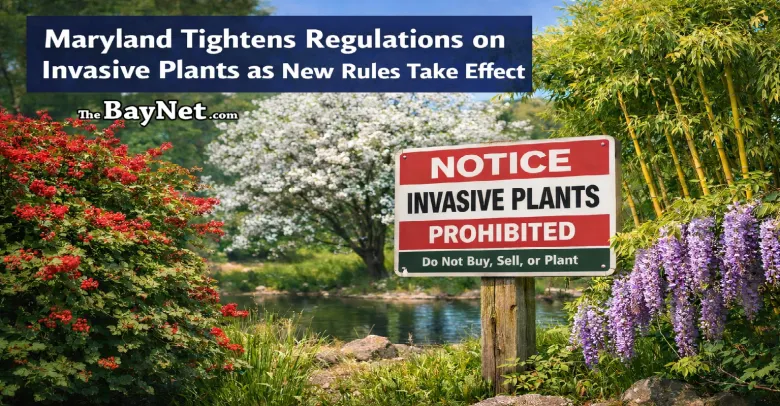
Good news travels fast, and we first became of the effective date when the Baynet published an article on January 17 titled Maryland Tightens Regulations on Invasive Plants As New Rules Take Effect. The news was also spread through the Maryland Native Plant Society, The Maryland Native Plant Coalition, and Ban the Sale of Invasive Plants in Maryland on Facebook.
What’s Changing?
Thirteen commonly sold ornamental plants, widely used in landscaping but posing documented risks to Maryland’s ecosystems, have been added to the prohibited list. These plants include:
- Aralia elata (Japanese angelica tree)
- Berberis thunbergii (Japanese barberry)
- Cytisus scoparius (Scotch broom)
- Euonymus alatus (Burning bush, Winged euonymus)
- Ligustrum obtusifolium (Border privet)
- Nandina domestica (Nandina, Sacred bamboo)
- Phyllostachys aurea (Golden bamboo)
- Phyllostachys aureosulcata (Yellow groove bamboo)
- Pyrus calleryana (Callery pear) <-Bradford Pear
- Tetradium daniellii (Bee bee tree)
- Wisteria floribunda (Japanese wisteria)
- Wisteria sinensis (Chinese wisteria)
- Wisteria x formosa (floribunda x sinensis hybrid)
Phase-out Timelines
Existing nursery stocks are subject to a phase-out timeline:
- Potted plants must be phased out by January 15, 2027
- In ground plants must be phased out by January 15, 2028
You’ll still see these species available in nurseries throughout the phase-out period, unless nurseries choose to stop selling them early. After these deadlines, prohibited plants may no longer be in stock unless licensed nurseries, brokers, and plant dealers request a one year extension to sell existing stock, which they can do by submitting a written request to the Secretary of Agriculture and copying the Invasive Plants Advisory Committee. In addition, sterile or low risk cultivars may be eligible for exemption if they cannot hybridize, are clearly distinguishable, and have reduced environmental impacts.
For more details, check the MDA website,
Next up!
In 2026, the following plants will be assessed for prohibition; those with an * are prioritized.
- *Hedera helix (English ivy)
- *Mahonia bealei (Leatherleaf mahonia)
- *Miscanthus sinensis (Chinese/Japanese silvergrass)
- *Akebia quinata (Chocolate vine)
- *Albizia julibrissin (Mimosa or Silktree)
- *Buddleja davidii (Orange-eye butterfly bush)
- *Cenchrus purpurascens (Chinese fountain grass)
- *Hemerocallis fulva (Orange daylily)
- *Vinca minor (Common periwinkle)
- *Vinca major (Largeleaf periwinkle)
- Elaeagnus umbellata (Autumn olive)
- Glechoma hederacea (Ground ivy)
- Acer platanoides (Norway maple)
- Ligustrum ovalifolium (Garden privet)
- Ligustrum sinense (Chinese privet)
- Ligustrum vulgare (European privet)
- Lonicera japonica (Japanese honeysuckle)
- Paulownia tomentosa (Empress tree, Princess tree)
- Phyllostachys bissetii (Bisset bamboo)
- Pseudosasa japonica (Arrow bamboo)
The Biodiversity and Agriculture Protection Act (HB979/SB915) aims to strengthen the state’s control of invasive plant species by eliminating the two-tier system and moving the thirteen plants that were previously “Tier 2” plants (allowed to be sold with a warning) to “Tier 1” prohibited plants. It also allows for faster prohibition of harmful plants and creates a “watch list” for potential threats.
This is truly an example of advocacy in action! Thank you to everyone who testified, called, wrote in, and ultimately made this happen. But there’s more you can do on a personal level to help protect the native plants and creatures (biodiversity) that call Maryland home.
But wait; there’s more!
On a personal level, you can support this legislation and its implementation by taking some simple steps to protect Maryland’s native habitats and biodiversity. We must take every step we can to save our treasured Chesapeake Bay and its watershed for future generations.
Actionable Steps You Can Take
- Proactively Remove Invasive Plants: Remove invasive species from your property and replace them with native alternatives.
- Dispose of Invasives Properly: Do not compost invasive plants on-site. The law requires proper disposal, such as placing them in a sealed trash bag headed for a landfill.
- Plant Native Alternatives: Replace removed invasives with native plants that support local pollinators and birds.
- Encourage Local Nurseries: Ask local nurseries to stop selling plants that are listed on the Maryland Invasive Species Council’s Species of Concern list and to prioritize native plant options.
- Promote Native Landscaping Businesses: Support local nurseries that focus on native species rather than those selling invasive alternatives.
Advocacy and Awareness
- Educate Others: Share information about the harmful impacts of invasive plants on Maryland’s ecosystems and the benefits of the new law with neighbors, community groups, and local gardening clubs.
- Contact Local Officials: Contact your state delegates and senators to express support for strict enforcement of the act and for the “watch list” for future invasive threats.
- Support Native Plant Initiatives: Promote the use of native plants to support biodiversity and reduce the need for pesticides and fertilizers.
- Inclusion of Aquatic Plants: Support the expansion of the law to include both terrestrial and aquatic invasive plants.
Use iNaturalist to help gather data on the spread of invasive plants in Maryland!
- An invasive plant assessment looks at a plant’s ecological impacts, human impacts, management difficulty, and its current and future spread and abundance. The assessment uses iNaturalist (among other sources) to determine a plant’s distribution and abundance.
- Add your observations of invasive plants found in natural settings (not cultivated settings) to iNaturalist so data will be as accurate and complete as possible as the additional invasive plants are being assessed in 2026.
A Legislative Approach to Promote and Protect Native Plants
For more information about the work done behind the scenes for the invasives plant bill, watch our recording of A Legislative Approach to Promote and Protect Native Plants from May 2026. Listen as Kirsten Hoffman and Judy Fulton share the details of legislation that promotes native plants by creating the Maryland Native Plants Program and legislation that strengthened Maryland’s invasive plant laws. Both bills are in their implementation phases, and they provided updates on new resources that these laws have made available and discussed what work is still to be done.
Wild Ones Chesapeake Bay is deeply rooted in native plants and cultivating partnerships, while striving to educate, advocate, and collaborate to connect people and native plants for a healthy planet. Our vision is native plants and natural landscapes thriving in every community. Check out our Events page, Google calendar, Facebook, and/or Instagram for our upcoming events. And don’t forget to subscribe to our new YouTube channel and email subscriber list!
