In our last newsletter, we suggested that fall is the best time for planting. Although this is a generally accepted concept in the horticulture trade, digging a bit deeper into resources for planting seeds and container-grown plants opened my eyes to the nuances of when is the best time to plant. In this first of a two-part series, we’ll discuss when to plant container-grown plants (seedlings, plugs, etc.). In Part 2, we’ll discuss when to plant seeds.
Planting seasons are frequently described in anthrocentric (human-centric) terms (spring, summer, fall, winter), which can cause a lot of confusion for novices. We have made this handy chart from a phytocentric (plant-centric) perspective, illustrating the planting seasons in terms of early growth, active growth, pre-dormancy, and dormancy, reflecting the growth cycles of the plants.
Native plants grow in cycles of active growth and dormancy, and planting during dormancy can enable your plants to take advantage of the full active growth season. ~ Source: Bona Terra
So it’s fall and you’ve brought home plants and seeds from your local native plant sales, shares, and swaps or ordered them from an online source. The good news is you have several months ahead of you that are perfect for planting those plants that are approaching their dormant phase. And to help you plant for success, we’ve rounded up some resources that we hope you will find useful.
Plugs Anyone?
Check out this comprehensive resource from Izel Plants, A Practical Guide to Planting with Plugs, that one of our members recently sent in. From describing plugs, site prep and timing, pre-planting tips, planting, post-planting tips and more, this guide will “keep your planting motivation up and your spirits high by reviewing guidelines that will have you planting plugs like a pro.” Although specifically referencing plugs, this resource has a lot of key concepts can set your plants up for success whether planting seedlings, plugs, or potted native plants.
Bona Terra focuses on growing local ecotypes within 100 miles of their nursery in Charles County, Maryland, using minimal fertilizer and no pesticides, herbicides or growth hormones. Did you know that Bona Terra has a Plant Grant and offers free native seedlings to the community in their effort to help support our local ecosystems. If you are the lucky recipient of Bona Terra community pots through their Plant Grant or the recipient of small divisions from their community pots at seedling giveaways, Bona Terra offers resources that are helpful in understanding plant availability from one of our premier local growers:
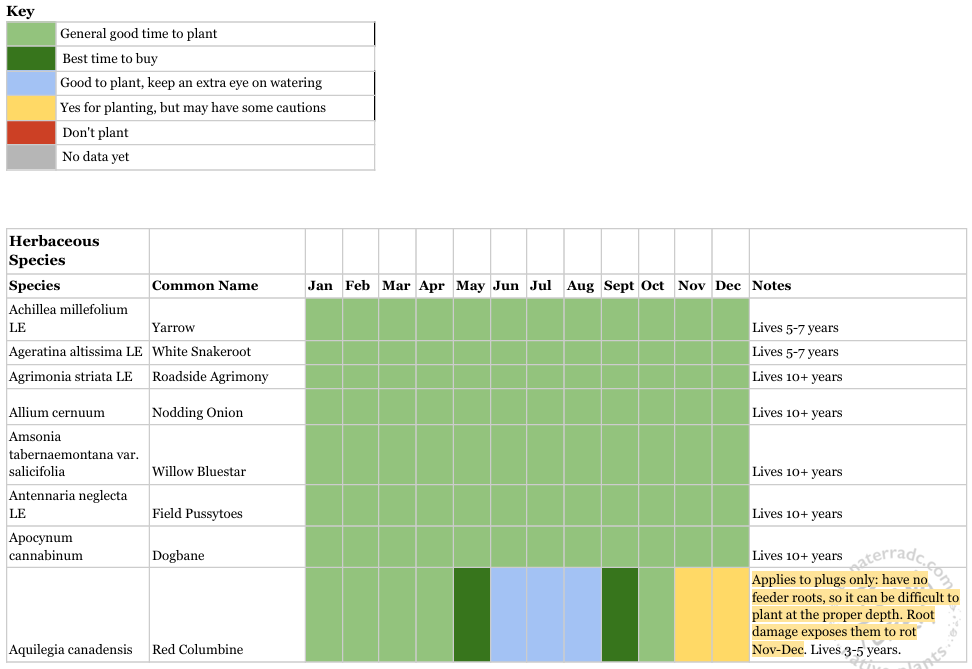
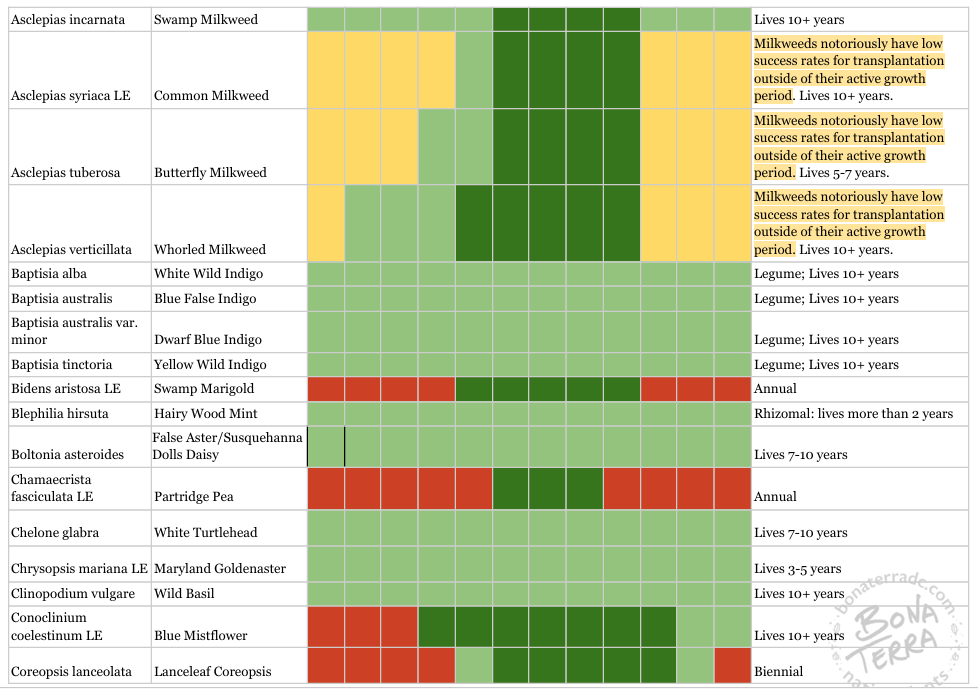
In addition to Plant Grant, Bona Terra has native plants available for sale to homeowners, landscape professionals, and conservation and restoration non-profits. They offer delivery and pick-up on orders, either at our nursery in Indian Head, Maryland or at their office in DC. Their Container-Grown Planning for Planting Schedule” (excerpt below) is intended to help homeowners and native plant enthusiasts in the Washington DC region gauge the ideal times to purchase and plant different species of native plants specifically from Bona Terra. While some information listed may be broadly applicable, all of the information detailed in this guide is based on Bona Terra’s environmental growing standards, which may differ from growers in other regions and other local growers using different nursery practices.
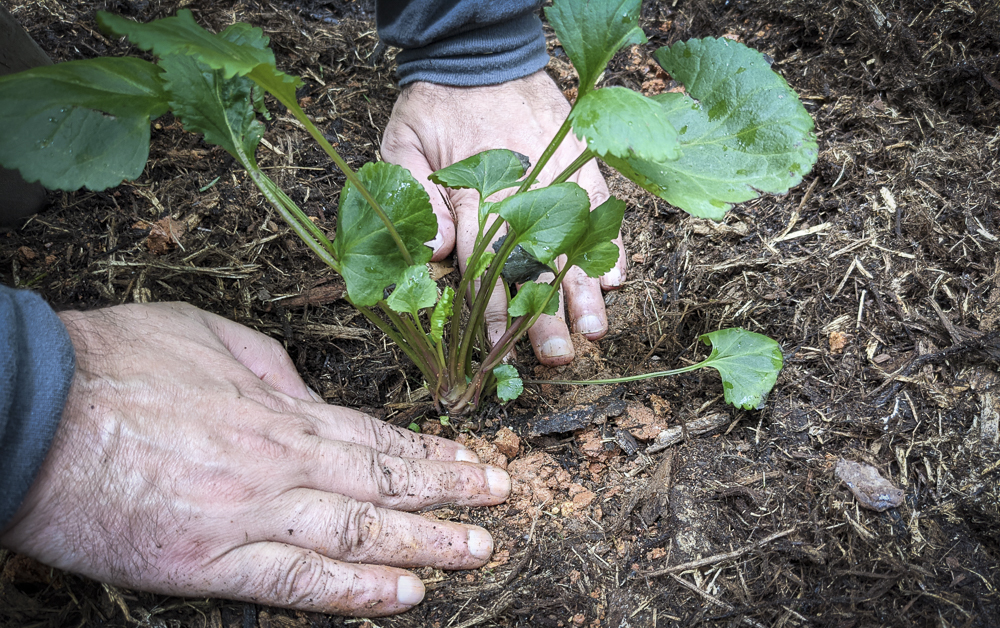
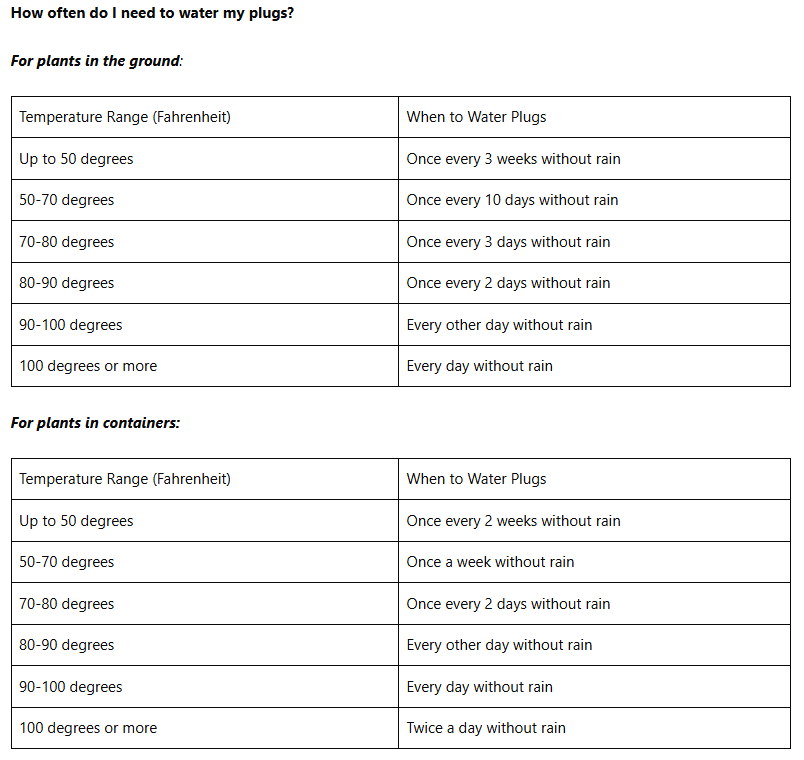
Bona Terra offers these general recommendations for planting plugs: “Make sure you’re planting your plug species in the correct habitat by researching your plant online (specifically check the required soil content). Amend soil as needed by adding compost, removing weeds, etc. Dig a hole so that surface of the plug is visible while the rest buried, funneling any mulch away from the plant.“
And once watered, they recommend the following watering routine for plugs:
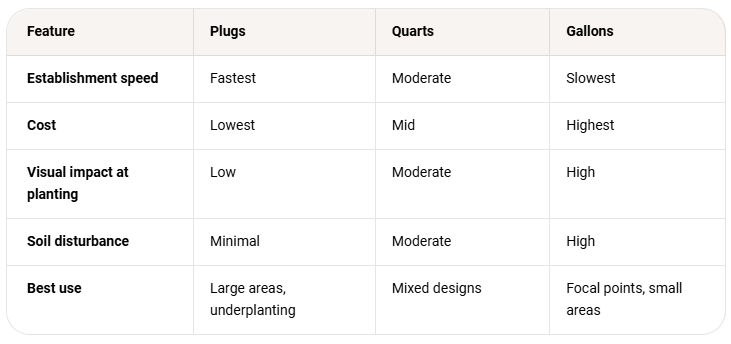
Native Plant Gallons vs. Plugs vs. Quarts
When planning a native landscape, most people naturally gravitate toward larger plants. A gallon container looks established, fills space quickly, and gives the impression of instant success. Plugs, by comparison, can feel underwhelming and slower to deliver visual impact. Quarts tend to fall somewhere in between, offering a compromise that feels safe and familiar.
But native plants and landscapes don’t behave like traditional ornamental plantings. They’re designed to establish, expand, and evolve over time. That means the size of the plant you install on day one is only part of the equation. What matters more is how that plant transitions into your soil, develops its root system, and competes within a broader plant community.
Choosing between plugs, quarts, and gallons is a strategic decision that influences installation time, plant survival, long-term maintenance, and the overall success of your landscape. ~ Source: Pizzo Native Plant Nursery
Bottom line: For large-scale or long-term native landscapes, plugs often deliver the best balance of cost, efficiency, and long-term success. Quarts offer a middle ground, while gallons are best for immediate visual impact but may require more care and investment.
In the second in a two-part series, we’ll discuss when to plant seeds. For many native plant enthusiasts, nothing beats the thrill that comes from planting a native seed and watching it germinate and thrive into a plant that provides ecosystem services for insects, birds, and other wildlife. Then we collect seeds and start the whole cycle over again. Just as there are nuances for how and when to plant plants, there are nuances to starting plants from seeds.
Wild Ones Chesapeake Bay is deeply rooted in native plants and cultivating partnerships, while striving to educate, advocate, and collaborate to connect people and native plants for a healthy planet. Our vision is native plants and natural landscapes thriving in every community. Check out our Events page, Google calendar, Facebook, and/or Instagram for our upcoming events. And don’t forget to subscribe to our new YouTube channel and email subscriber list!
Wild Ones’ mission is to promote native landscapes through education, advocacy and collaborative action.