Happy Valentine’s Day!!
Collecting, cleaning, sharing, stratifying, winter sowing, and gifting native seeds are keystone activities of Wild Ones Chesapeake Bay. Read on to learn more!!
Collecting Seeds
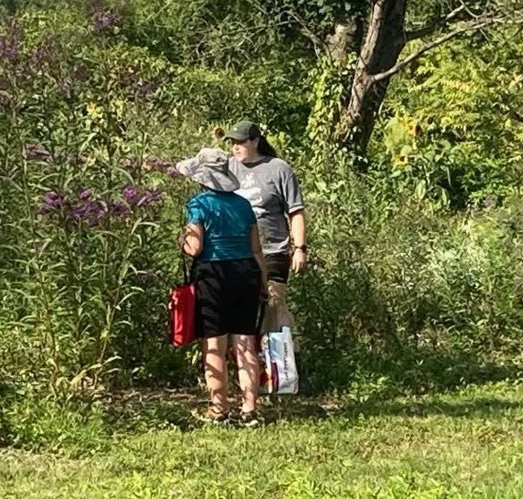
On October 1, 2025, thirteen students from the Natural Resources Management class at Dr. James A. Forrest Career and Technology Center in Leonardtown visited the Leonardtown Library Front Yard native gardens to learn about native seeds groups, followed by seed collecting with chapter members Marlene and Bill Smith, Dorothy Birch (their teacher), Liz Curtz, and Debra Pence. The students took the seeds back to school to dry for future native seed cleaning and winter sowing workshops. Joining us at the event were our partners from Friends of St. Clements Bay and University of Maryland Extension Master Gardeners.
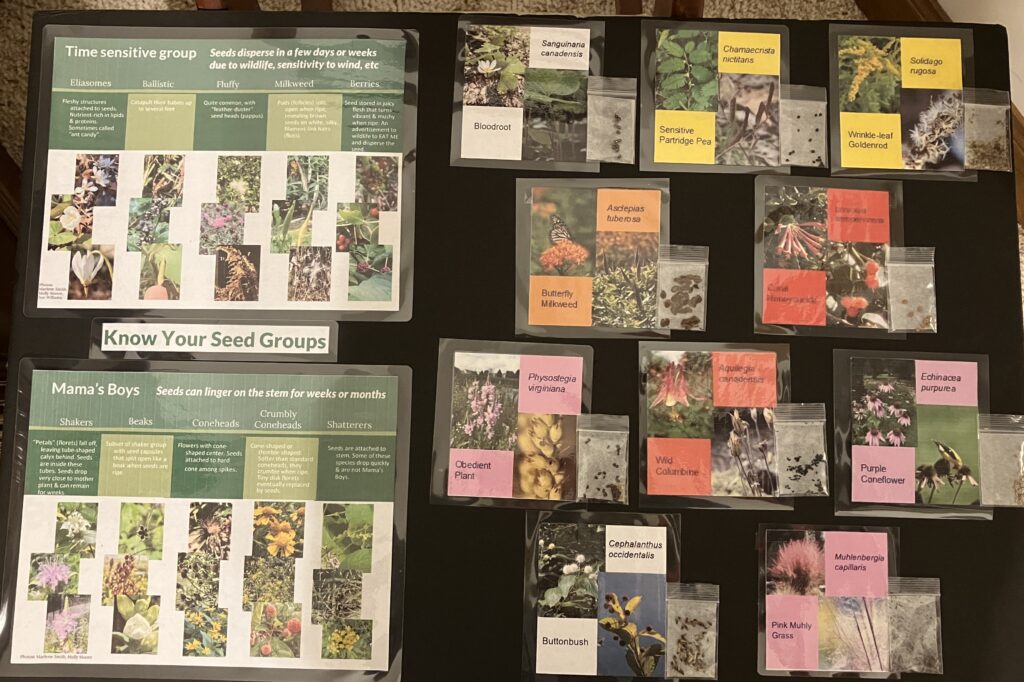
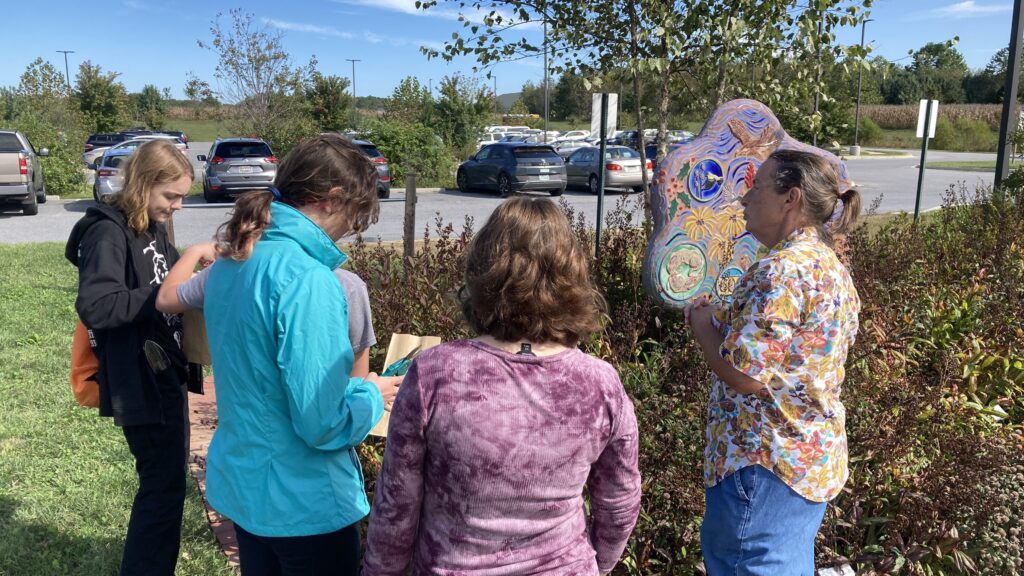
Earthly Delights Native Gardening LLC spotlighted our chapter’s fall seed-collecting efforts, illustrating how seed gathering not only supports native plant propagation but also transforms volunteers into committed conservationists. “Seed collecting is contagious, and the bug was passed on to me by my amazing friend Marlene Smith. I met Marlene in January of 2024 when I went to my first volunteer event at the USGS Bee Lab. All I knew when I signed up was that someone would tell me what to do to help them propagate native plants, and in return I could take some home. Bonding over our shared love of spreadsheets, Marlene… took me on as a student and partner-in-crime. Together with Bill, Marlene’s witty and kindhearted husband, and Misty, their pampered service pup, we raised around 2,700 plants last year [2024].” ~ Chapter member Miranda Yourick, Seed Collecting Season, October 3, 2025
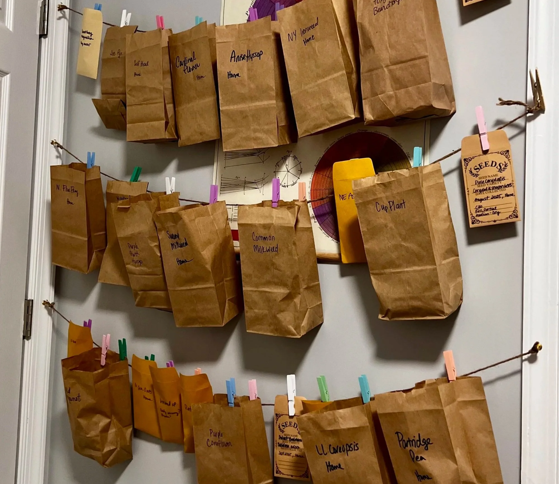
Cleaning Seeds – “Threshing and sieving by hand. Oh my!”
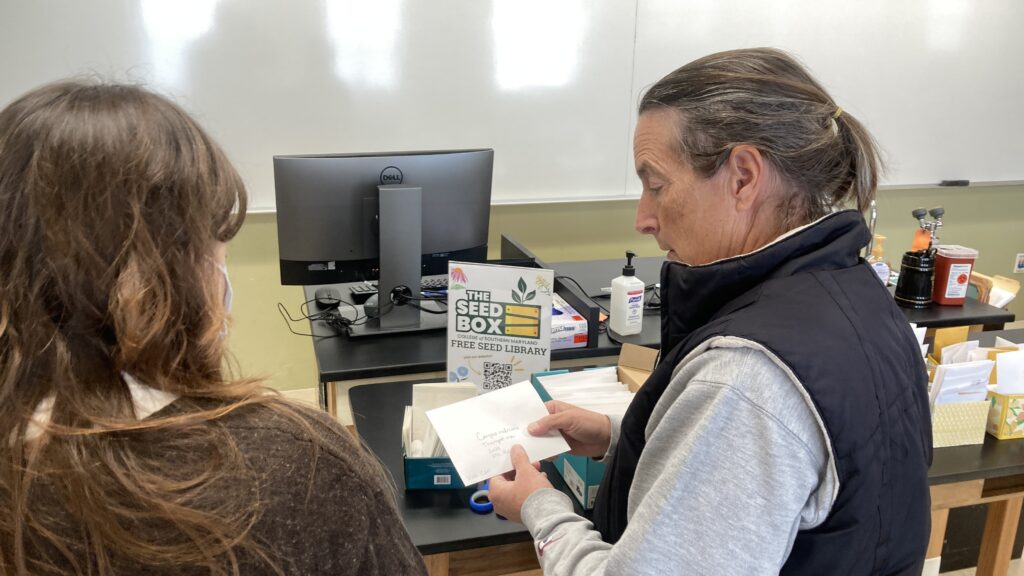
On Friday, October 10, 2025, we joined chapter members Maddie Kaba and Tracy Stuller at the College of Southern Maryland (CSM) for a seed cleaning workshop. And we returned again on Wednesday, November 5, to help package our native seed donation for the Seedbox, CSM’s Seed Library.
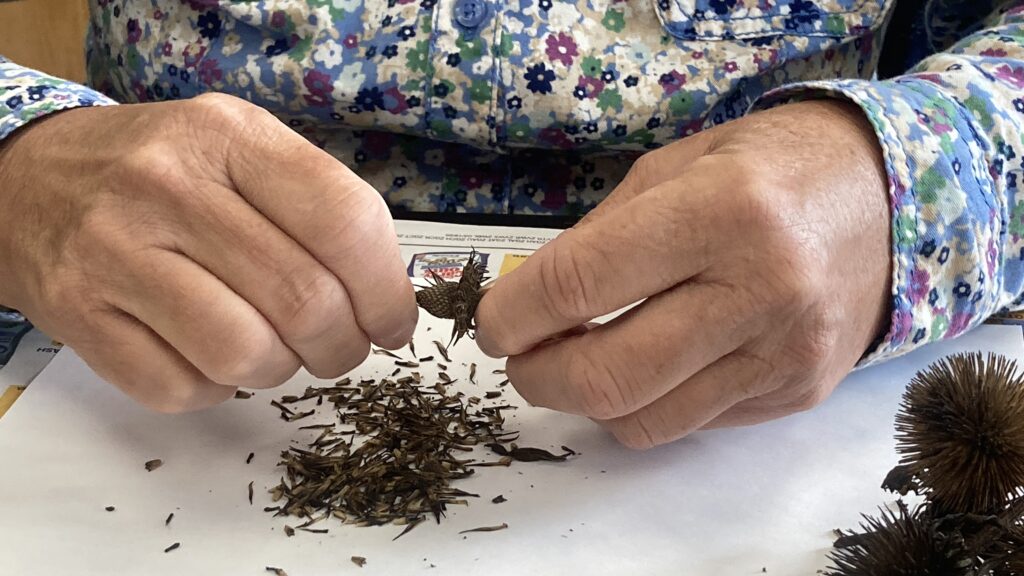
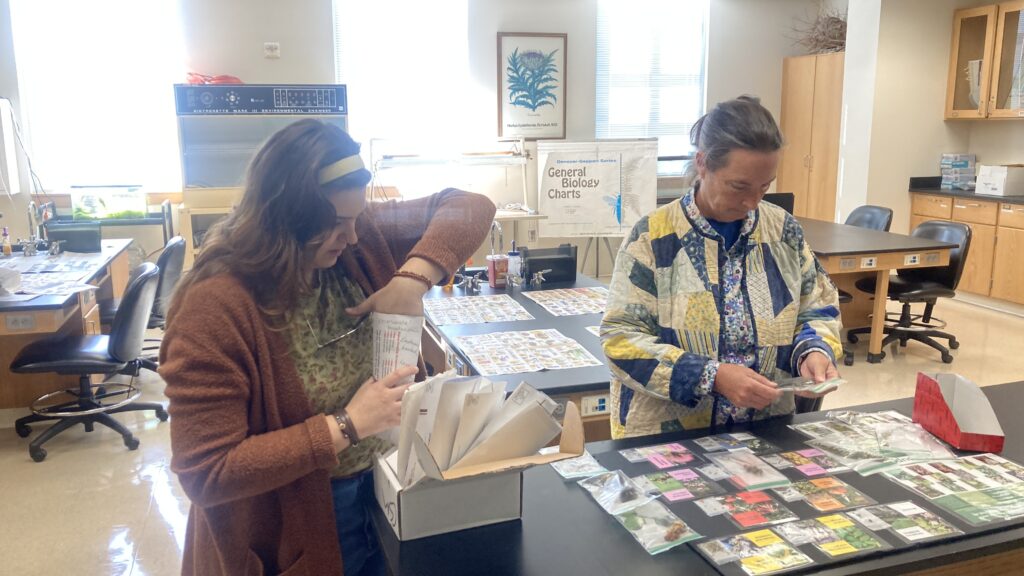
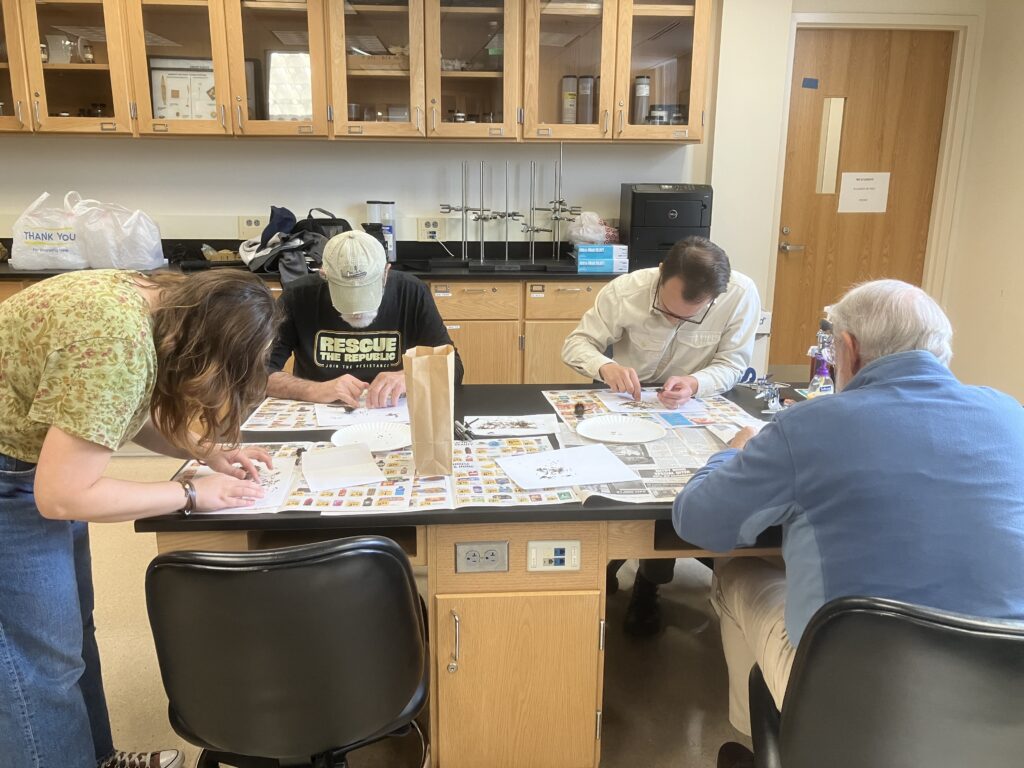
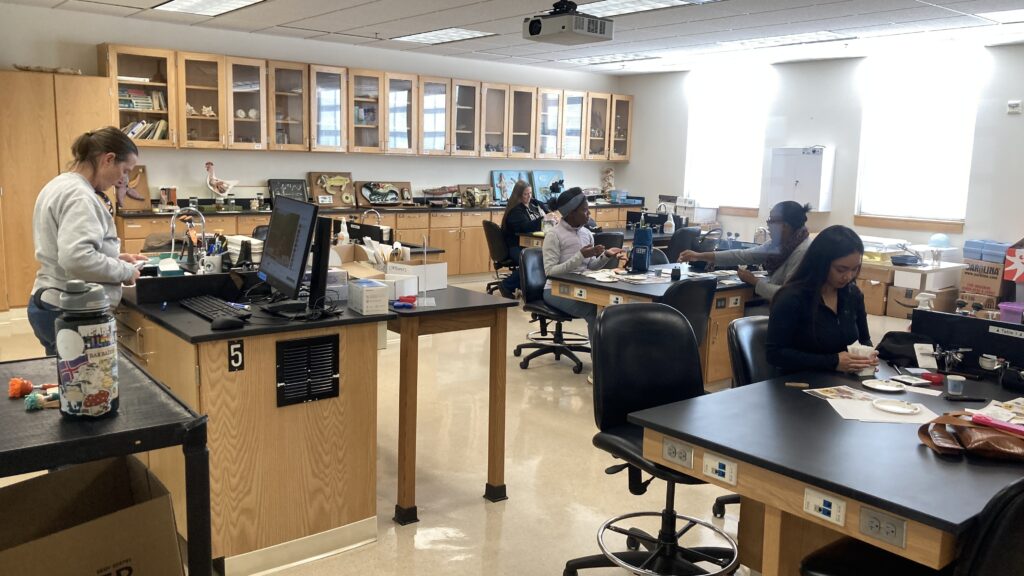
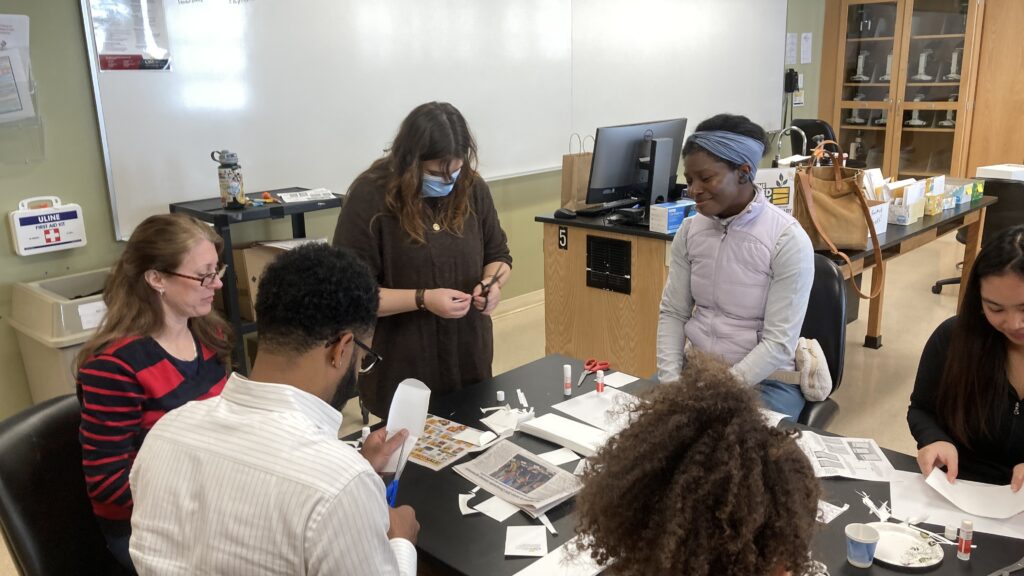
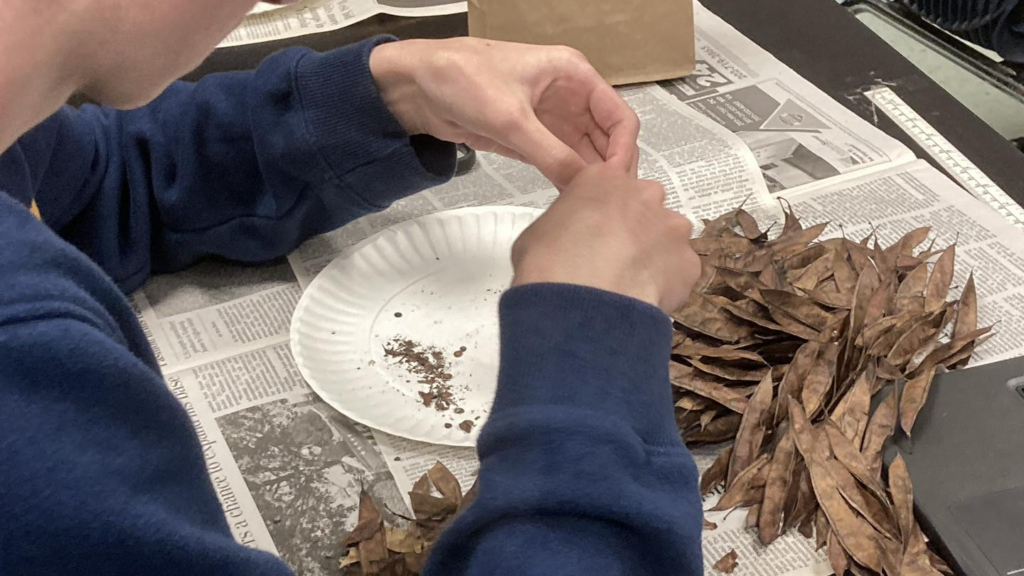
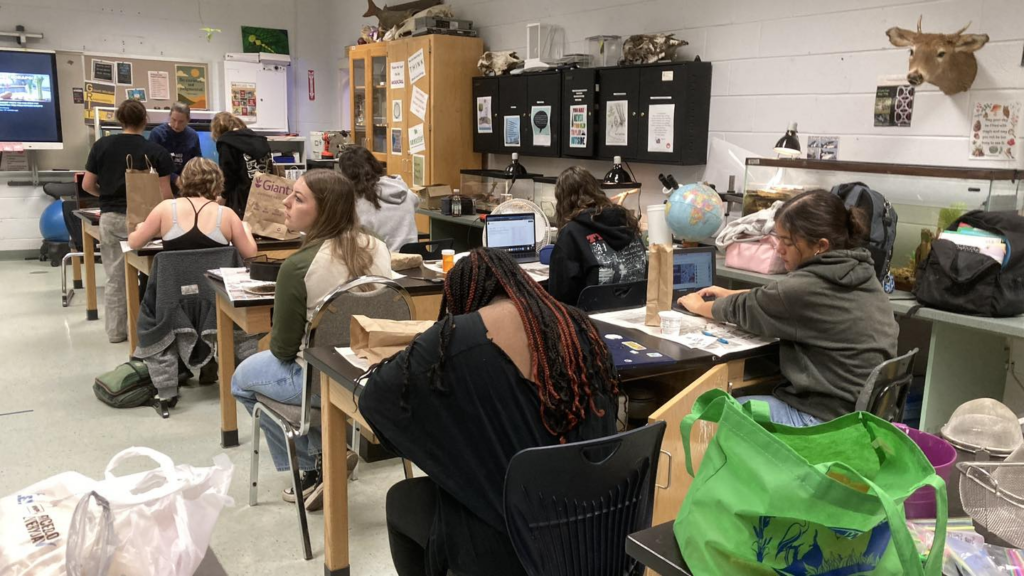
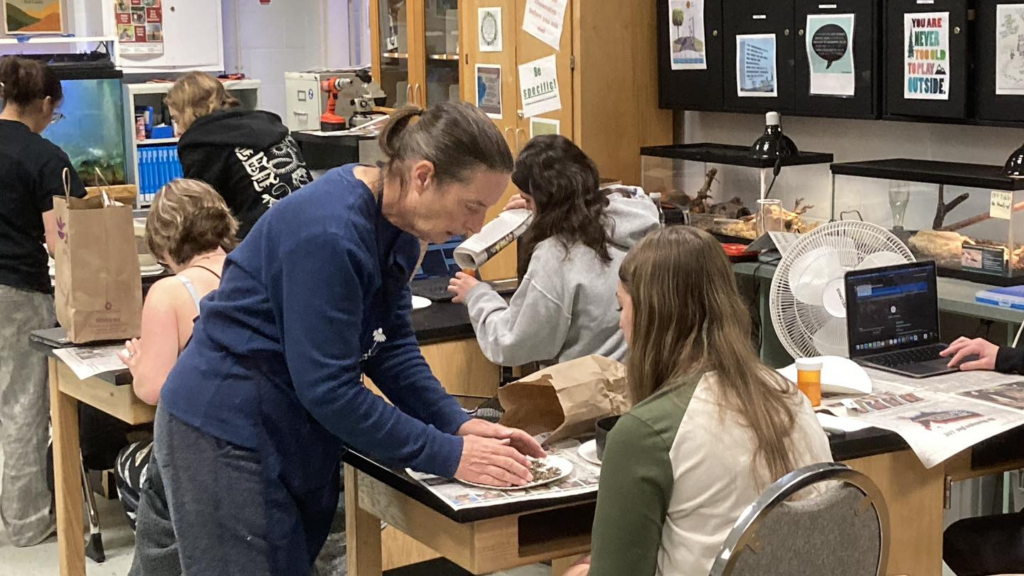
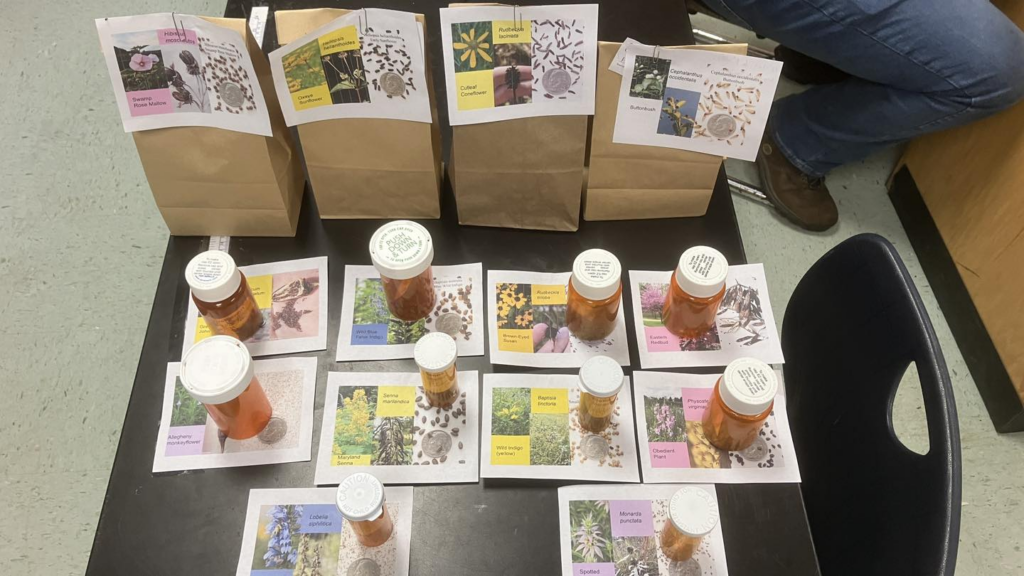
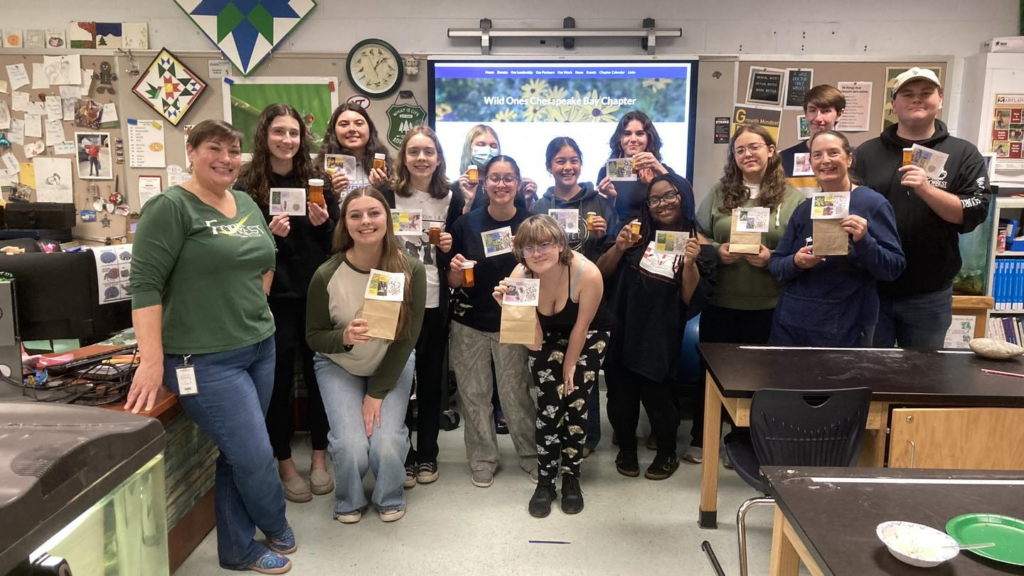
On Tuesday, November 25, 2025, we had the pleasure of teaching seed cleaning techniques to students in the Natural Resources Management class at Dr. James A. Forrest Career and Technology Center in Leonardtown. Students learned about manually separating seeds from chaff, using methods like threshing and sieving. Thirteen students and a substitute teacher cleaned fourteen species of native plant seeds that will be distributed through a variety of chapter activities and events over the next year. After cleaning seeds, we were invited to join the students in their Thanksgiving potluck. Thank you for your hospitality! And special thanks to teacher and chapter member Dorothy Birch for inviting us back for our third year to work with her wonderful students.
Sharing Seeds
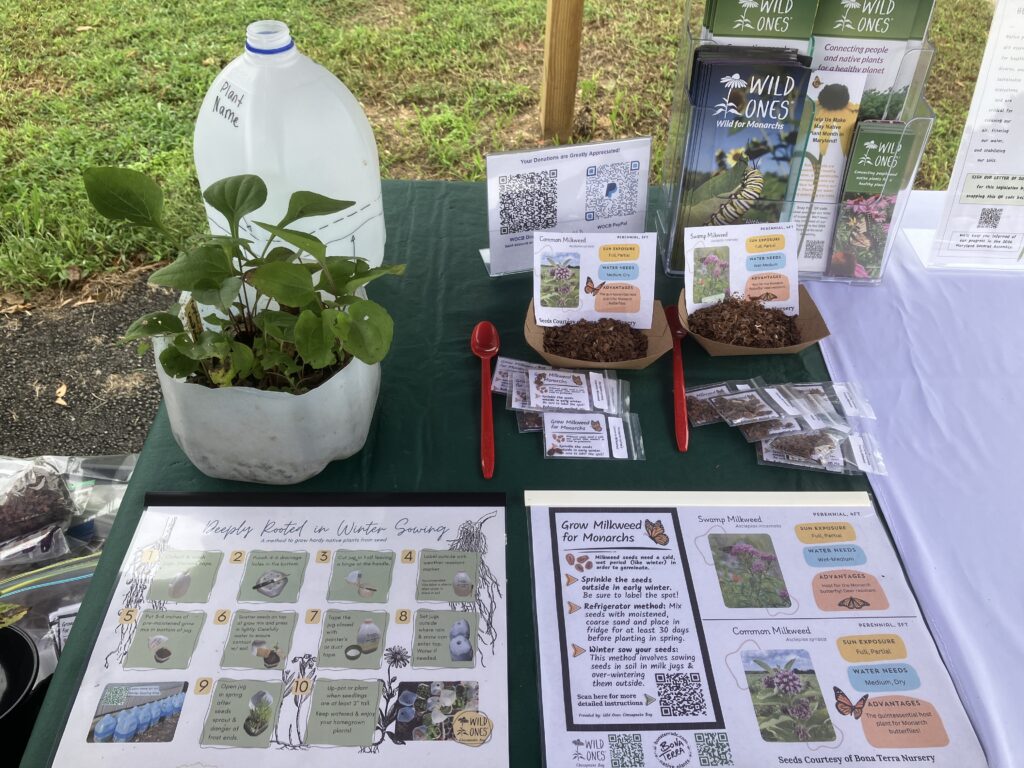
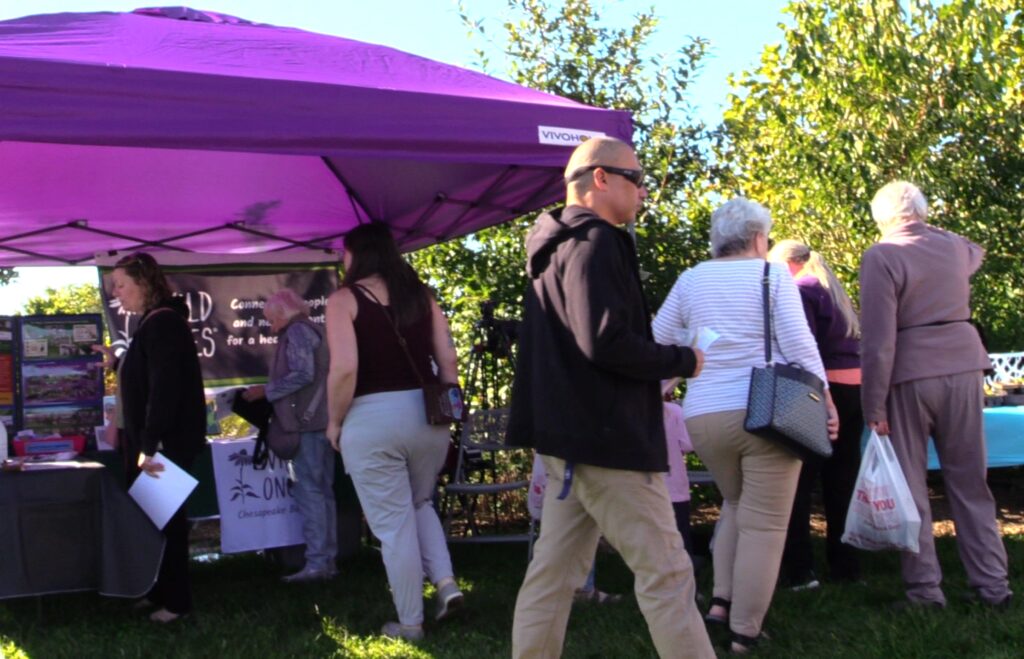
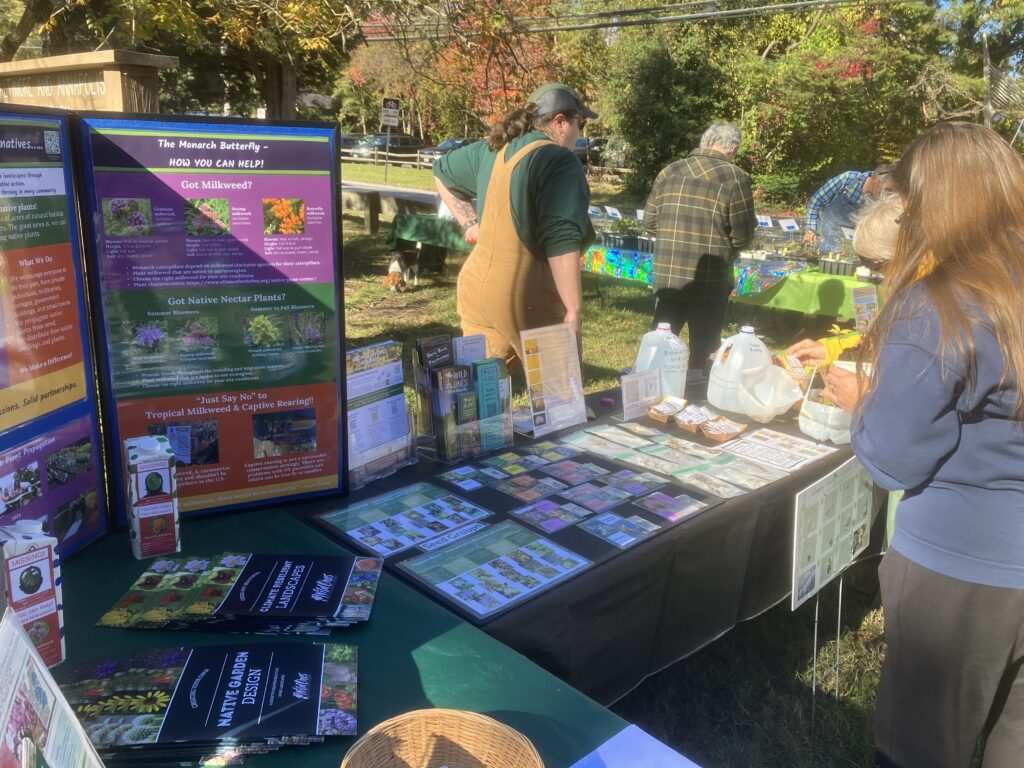
Collecting and cleaning seeds is not enough. Our goal in collecting seeds is to further Wild Ones’ vision of native plants and natural landscapes thriving in every community. Our chapter members distributed native seeds at various events throughout the fall and winter, including seed swaps, outreach events, and winter sowing workshops.
Monarchs and Milkweed at Merkle (9/27/2025)
Fall Plant Swap at the Leonardtown Library Front Yard Native Garden (10/4/2025)
Make a Difference Day 10/25/2025
Stratifying Seeds
Did you know that many native seeds need a period of cold, moist stratification before the seed will germinate? If you missed it, check out the article in the Wild Ones Journal (Winter 2025) for “Winter’s wake-up call: The science of seed stratification.” Written by Wild Ones Staff, the article explains why seeds need stratification, what it is, and the four types of stratification.
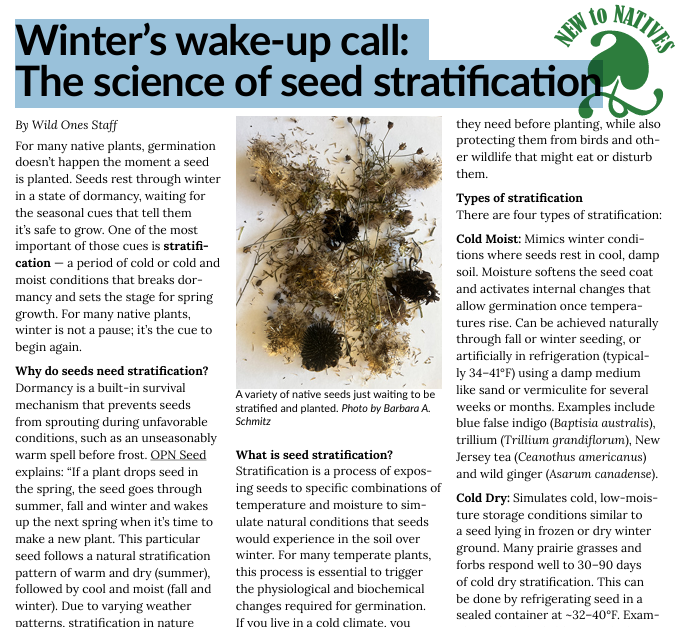
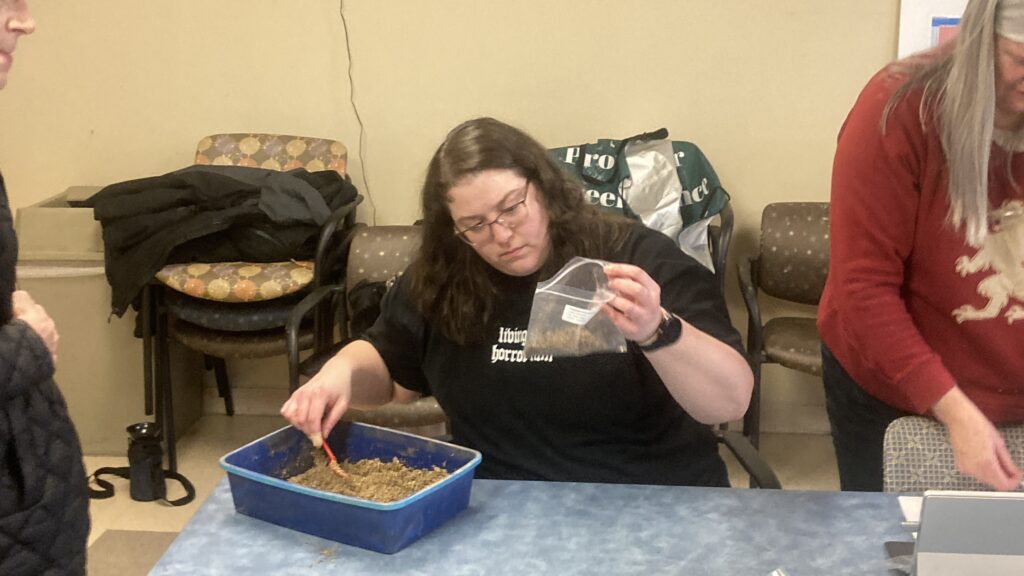
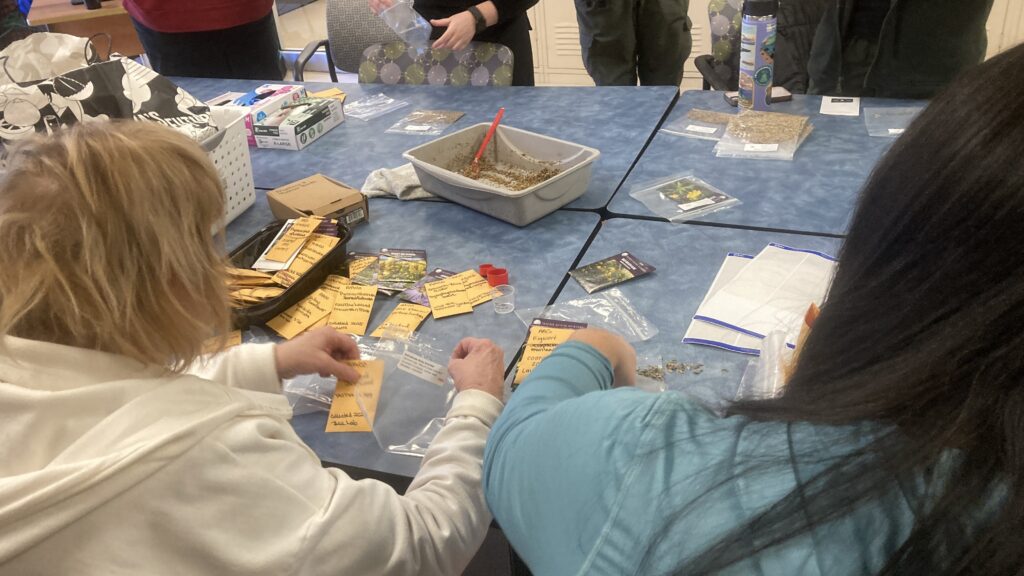
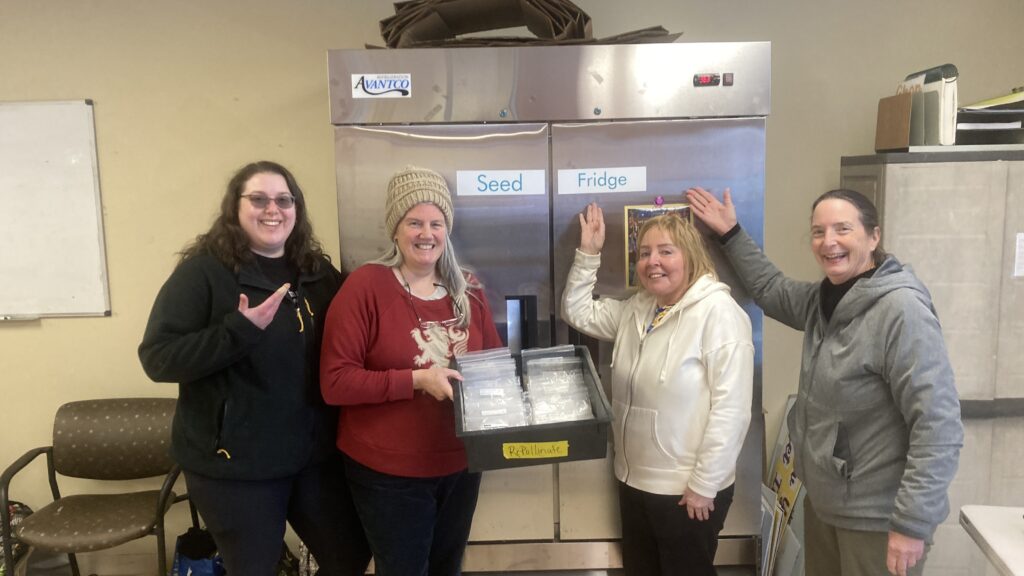
Seed stratification is well underway this winter, beginning in January with seeds going into wet vermiculite at members’ homes and at Providence Greenhouses, our partner propagation site this year. Marlene began stratifying over 4 dozen varieties or native plant seeds in early January for chapter projects and activities in the coming months.
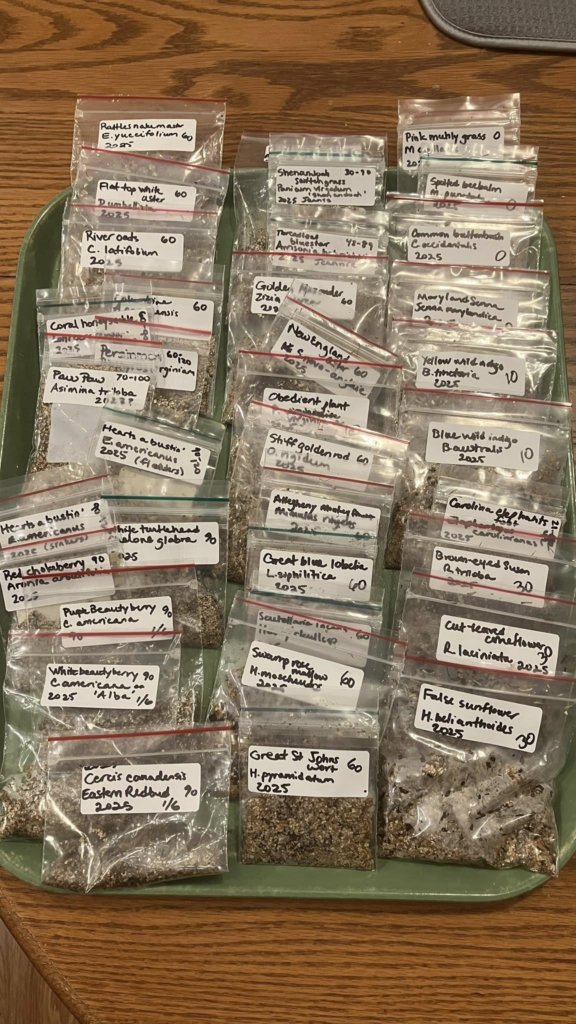
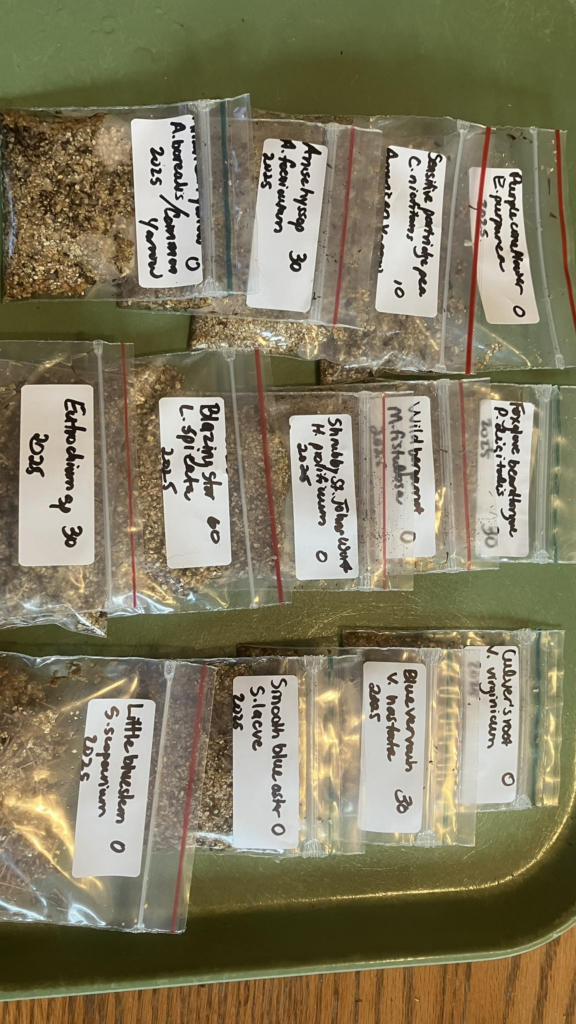
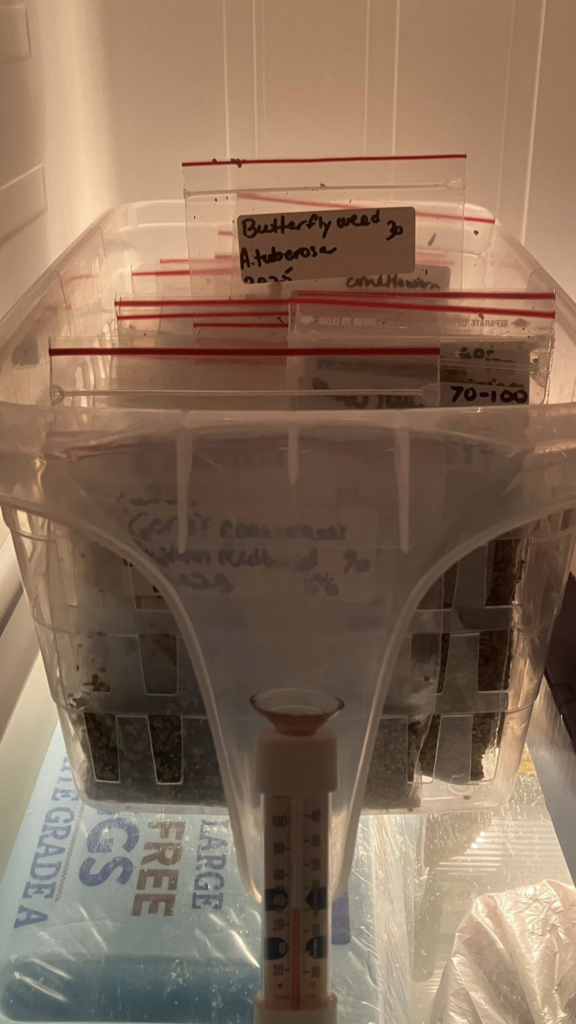
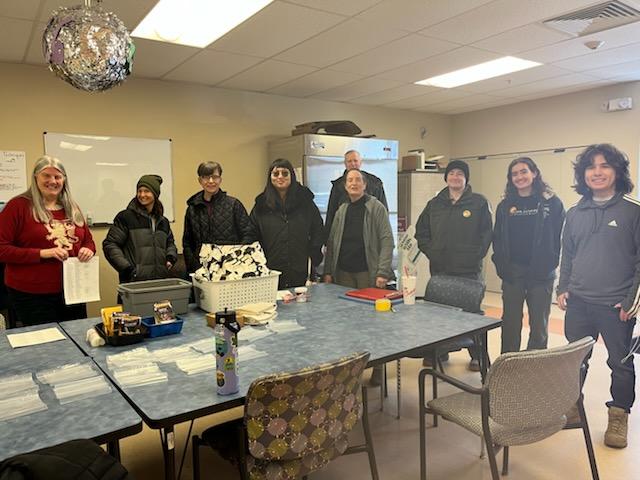
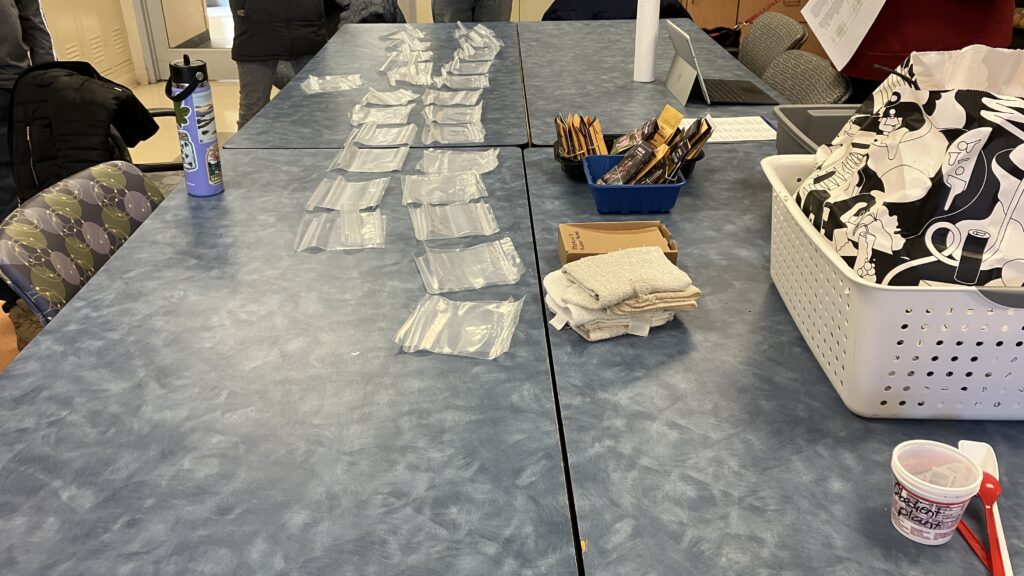
The USGS Bee Lab has put a pause on actively doing any plant activities this season, so we’ve moved our seed stratification to Providence Greenhouses at the invitation of our awesome partners at RePollinate Anne Arundel County (AACO). Transplanting for the project will be relocating to the Dairy Farm in Gambrills, MD. The photos below highlight the level of true collaboration between the many partners.
Winter Sowing
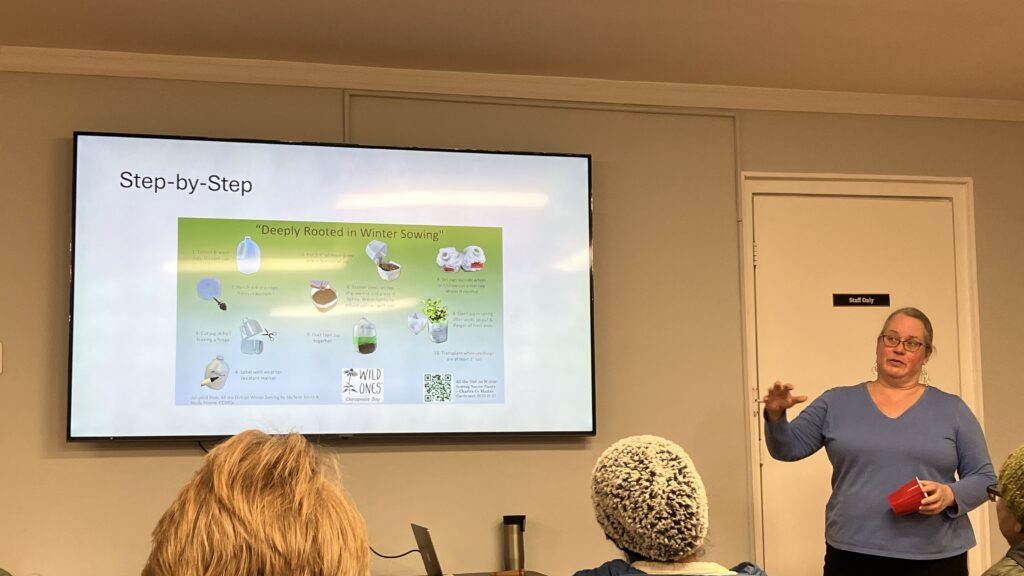
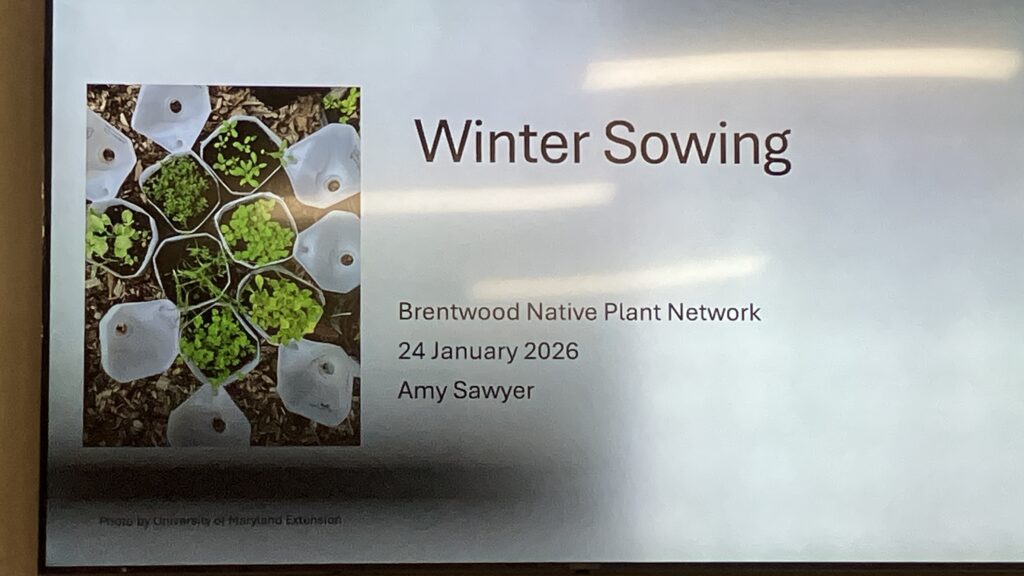
We took a break from hosting community winter sowing workshops the past couple of months, and instead watched several webinars on winter sowing to see if we could learn new tips from other winter sowing enthusiasts. We also attended a local “Gardening with Native Plants” workshop on Saturday, January 24, hosted by the Brentwood Native Plant Network and sowed a few milk jugs during their winter sowing portion of the workshop.
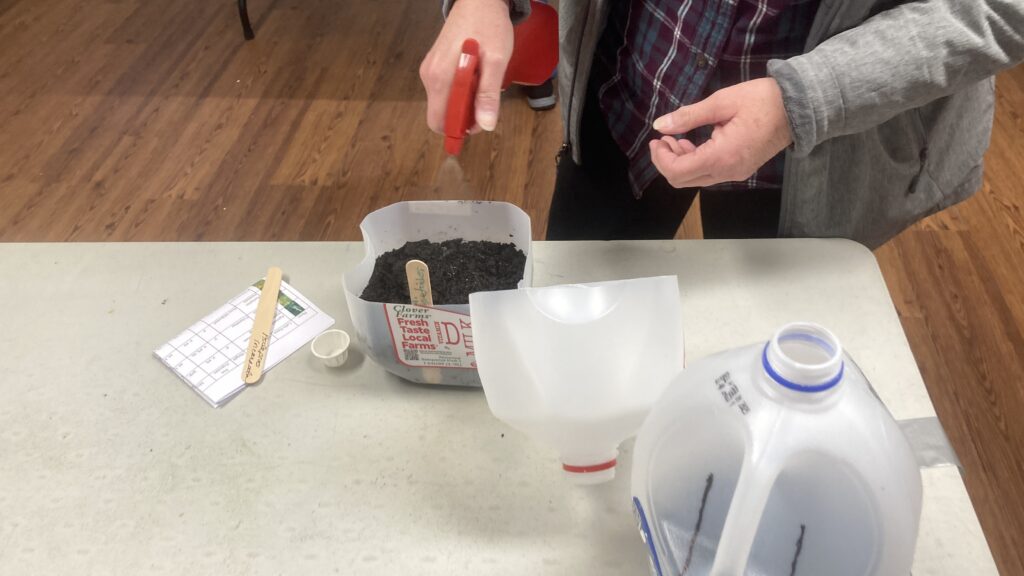
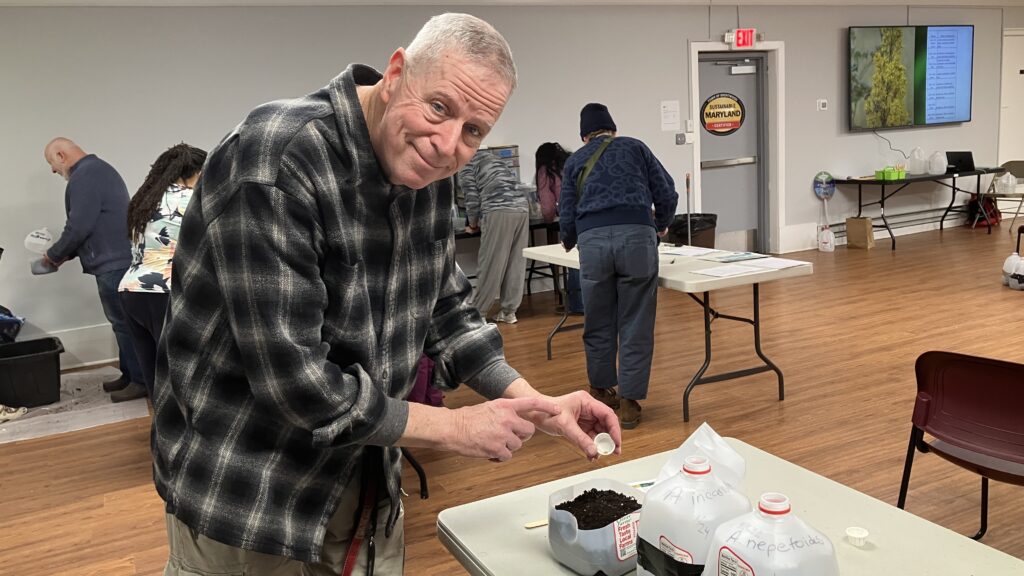
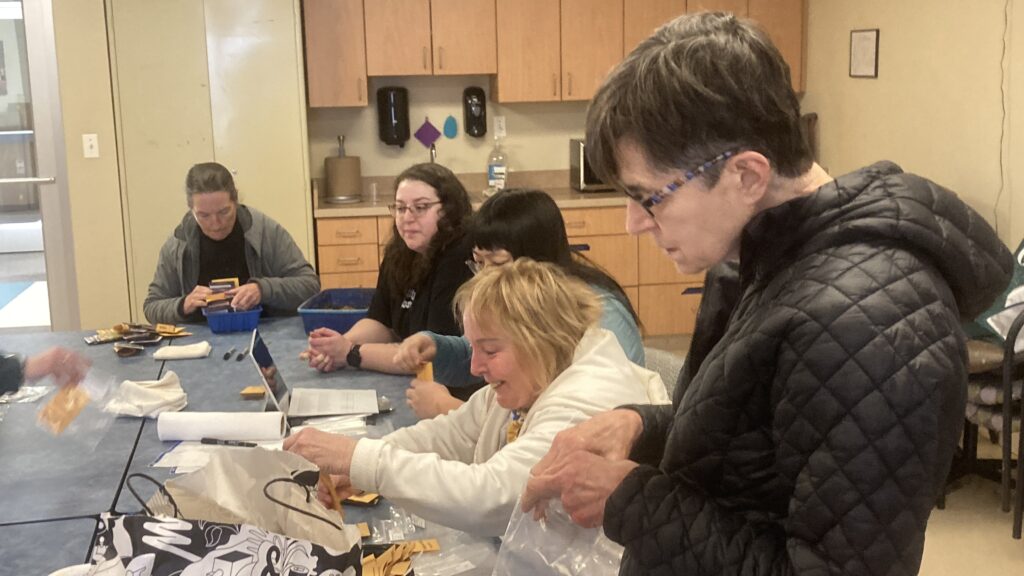
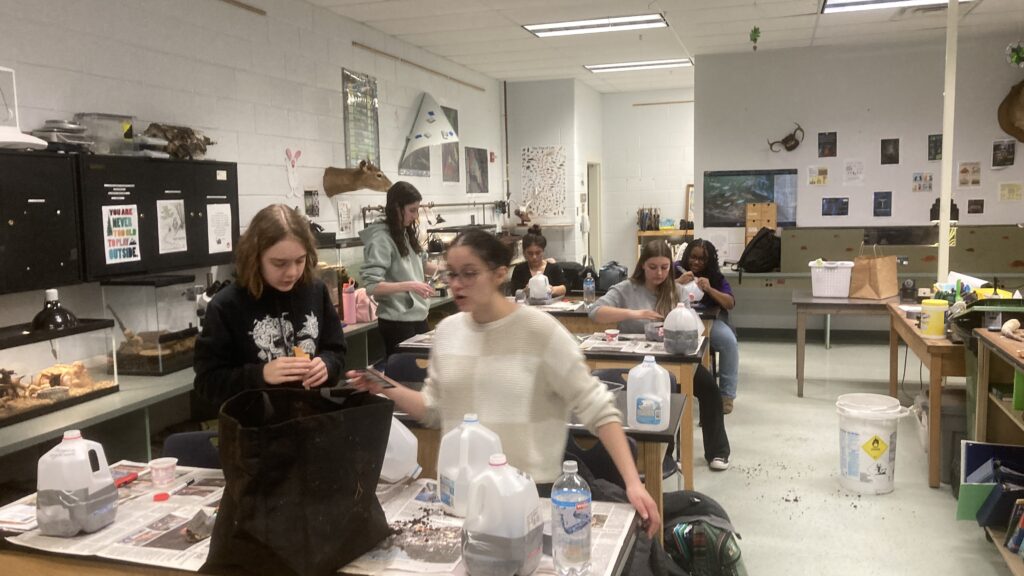
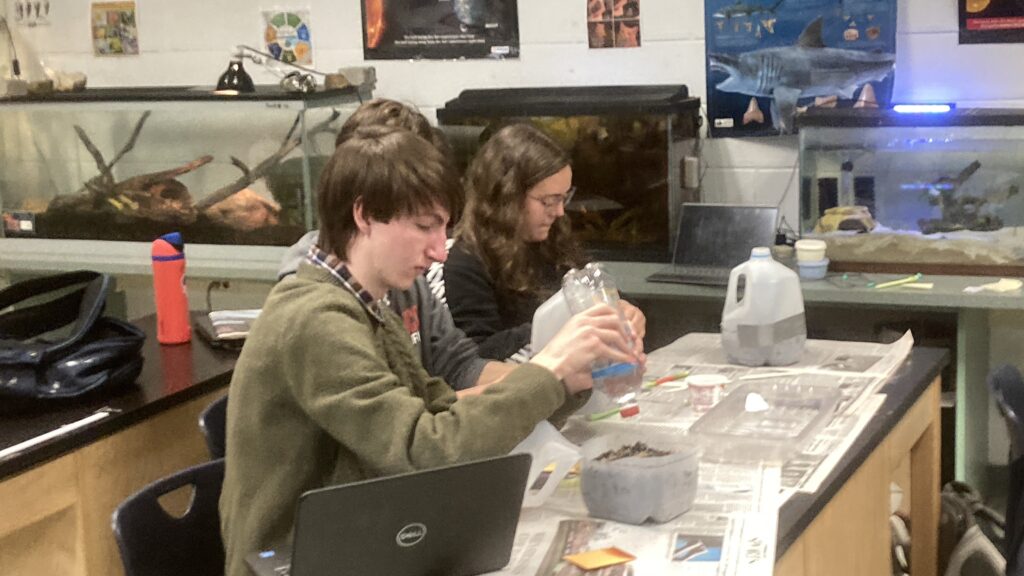
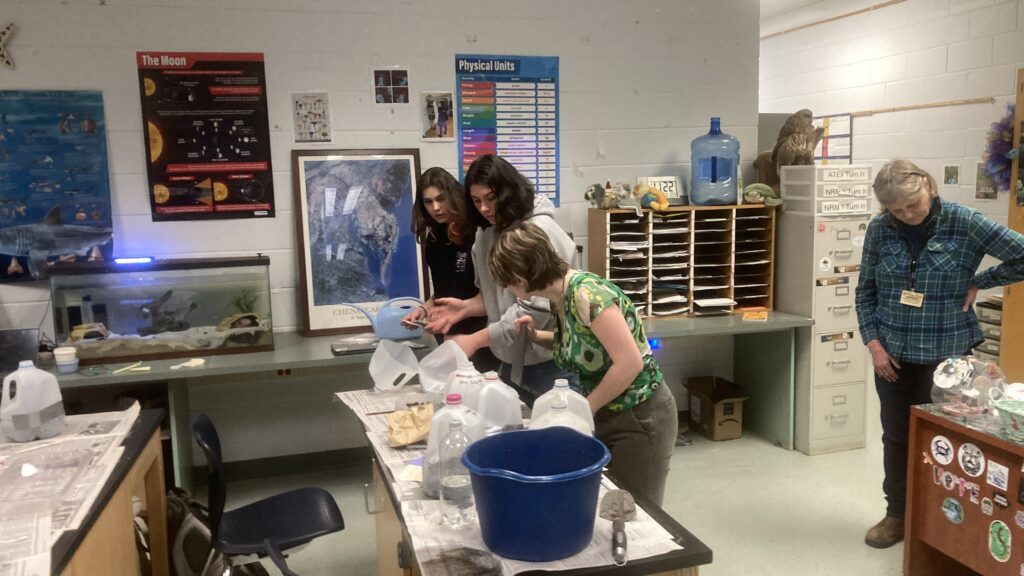
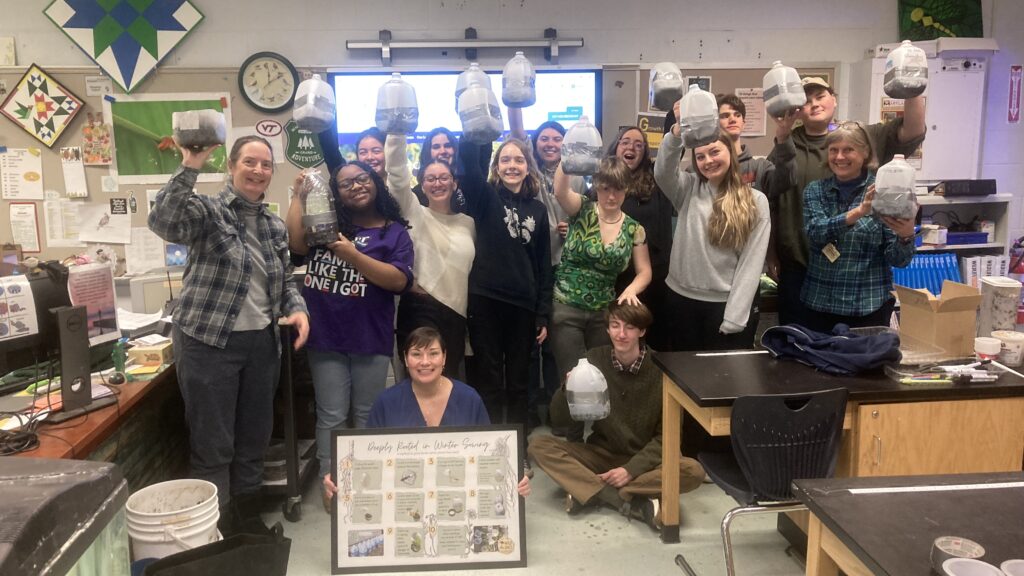
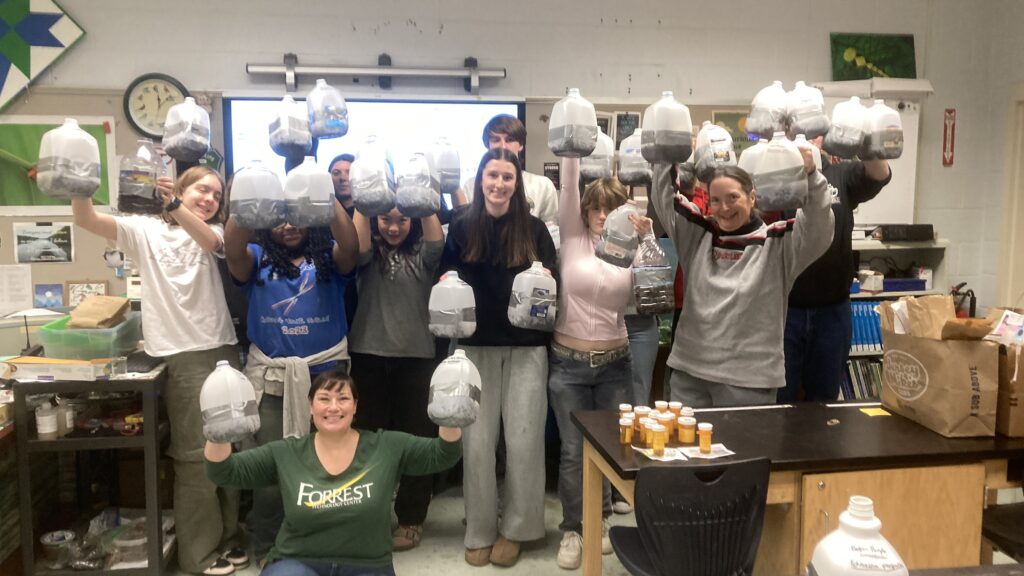
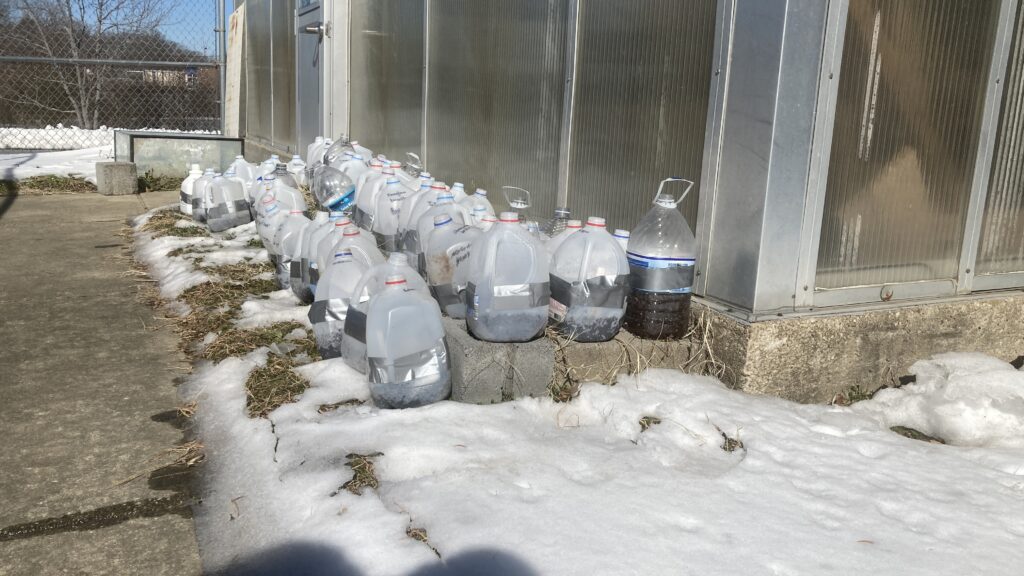
Wednesday, February 4, and Monday, February 9, found us back at Forrest Tech for winter sowing workshops with the students in the Natural Resources Management. Chapter members Marlene, Bill, Dorothy (their teacher), and Deb assisted the students in winter sowing 85 milk jugs of native seeds. Their goal is to grow native plants for their spring plant sale and to plant in the new gardens they are establishing on the school campus.
To further share our love of winter sowing, we included a section in our display at the Twin Beaches Public Library that showcases some of our favorite winter thing. Native plants provide such a beautiful color palette in winter, and we hope visitors to the display will appreciate the beauty of winter in the native garden and the opportunity to get their hands in soil in the middle of winter by winter sowing.
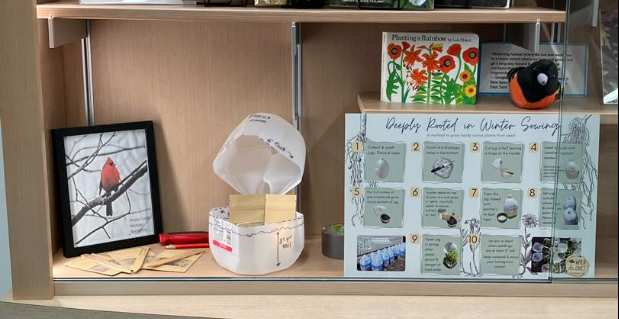
Looking for more information on stratification, winter sowing, and Maryland native plants? Check out the links below:
Deeply Rooted in Winter Sowing
Show Your Love with Native Seeds
Maryland Native Plants Program
Prairie Moon, How to Germinate Native Seeds
North Carolina Botanical Garden, Growing Native Plants from Seeds
Wild Ones Front Range, How to Winter Sow Native Seeds in Milk Jugs or Plastic Containers
Wild Ones Front Range, Propagation 101
Gifting Seeds
Valentine’s Day is an eco-friendly gesture that grows over time. Since mid-February is prime winter sowing season for many native perennials, it’s also a practical time for gardeners to start stratifying or winter sowing the seeds. Consider gifting native seeds that need 45 days or less stratification and provide the instructions for winter sowing along with the seeds. Suggestions for packaging seeds for gifting can be found on our Gifting, Sharing and Winter Sowing Seeds blog, or check out this link for DIY Seed Packet Ideas with instructions and creative ideas for personalizing.
When gifting native seeds to friends, family, coworkers, and community members, consider seeds that have special meaning to you. Native seed gift ideas for Maryland might include:
- Black-Eyed Susan (Rudbeckia hirta): The Maryland state flower is a classic choice. It is hardy, attracts pollinators, and provides a bright pop of gold to any garden.
- Wild Bleeding Heart (Dicentra eximia): Naturally on-theme for Valentine’s Day, this native perennial features delicate, heart-shaped pink flowers.
- Butterfly Weed (Asclepias tuberosa): A critical host plant for Monarch butterflies, this bright orange flower represents a gift of life for local ecosystems.
- Heart-leaved aster (Symphyotrichum cordifolium): The heart-shaped leaves are in bloom from late summer through mid-autumn. Traditionally asters have been associated with patience, good luck, and lasting love.
- Eastern redbud (Cercis canadensis) – This nitrogen-fixing tree offers year-round interest – from pinkish-purple buds in the early spring, to heart-shaped leaves emerging red through late spring before turning a deep green in summer and yellow in the autumn.
Or perhaps put together a gift with several species of native seeds that represent a theme that resonates with you and your special someone. Some suggested mixes might include:
- Pollinator Garden mix:
- Swamp milkweed (Asclepias incarnata)
- Butterfly weed (Asclepias tuberosa)
- Purple coneflower (Echinacea purpurea)
- Joe-Pye weed (Eupatorium maculatum)
- Ox-eye sunflowers(Heliopsis helianthoides)
- Blazing star (Liatris spicata)
- Black-eyed susans (Rudbeckia hirta)
- Sunny Meadow mix:
- Common milkweed (Asclepias syriaca)
- Butterfly weed (Asclepias tuberosa)
- Rough stemmed goldenrod (Solidago rugosa)
- Ox-eye sunflowers(Heliopsis helianthoides)
- New England aster (Symphyotrichum novae-angliaea)
- Black-eyed susans (Rudbeckia sp.)
- Wetland Garden mix:
- Swamp milkweed (Asclepias incarnata)
- Joe-Pye Weed (Eupatorium maculatum)
- Cardinal flower (Lobelia cardinalis)
- Blue vervain (Verbena hastata)
- Woodland Garden mix:
- Black cohosh (Actea racemosa)
- Blue wood aster (Symphyotrichum cordifolium)
- White wood aster (Eurybia divaricata)
- Poke milkweed (Asclepias exaltata)
- Wreath goldenrod (Solidago caesia)
- Roadside Garden mix:
- Butterflyweed (Asclepias tuberosa)
- Pearly everlasting (Anaphalis margaritacea)
- Lance-leaf coreopsis (Coreopsis lanceolata)
- Spotted beebalm (Monarda punctata)
- Black-eyed Susans (Rudbeckia hirta)
- Little bluestem grass (Schizachyrium scoparium)
When selecting native plants, please be sure to check to see if they are native to your local ecoregion, which we recently discussed in this Facebook post.
And don’t forget a nature-themed Valentine’s card. Lots of options are available online:
The Pollinator Partnership | Facebook
The Thoughtful Gardener | Facebook
Deeply Rooted Landscapes | Facebook
Discover the Forest | Facebook
ICYMI (In Case You Missed It)
“Long before winter sowing became a trending gardening topic online, Wild Ones members were already experimenting with seeds, soil, and seasonal cycles. In the Winter 1993 issue of The Outside Story, contributors shared practical guidance on seed stratification, cold-weather sowing, and hands-on ways to help young people understand how plants grow and move through the world.
More than 30 years later, these lessons remain deeply relevant.
This [linked] post brings together three archival resources from that issue: two short articles on seed starting and winter sowing, and a youth activity worksheet designed to spark curiosity and observation. Together, they remind us that working with native plants is both practical and profoundly educational, especially when we involve the next generation.” ~ Wild Ones
Wild Ones Chesapeake Bay is deeply rooted in native plants and cultivating partnerships, while striving to educate, advocate, and collaborate to connect people and native plants for a healthy planet. Our vision is native plants and natural landscapes thriving in every community. Check out our Events page, Google calendar, Facebook, and/or Instagram for our upcoming events. And don’t forget to subscribe to our new YouTube channel and email subscriber list!
